Tuesday, 7 July 2020

The Voice of Lived Experience

Writing in today's Guardian, it seems the founder of User Voice has doubts regarding the efficacy of the MoJ's plans for probation post-covid:-  

Think renationalising probation will cut reoffending? Think again

Ministers have swept the scandal of Chris Grayling’s failed privatisation under the Covid-19 carpet

My heart jumps at the decision to renationalise probation. But will the service I once knew come back?

Probation officers need great skills and patience, because offenders can be volatile people. One day they want to change, the next day they are lying to you, the next day they could be another reoffending statistic. But a good officer can understand when the service user is really ready for change. A good officer can support them through that. The reward: another service user changes their life and the public is safer.

I know because that was me, once. I was a criminal drug addict but my probation officer didn’t give up on me. She took long, detailed case notes and then got me into an addiction centre. That was 30 years ago. Sadly, it wouldn’t happen now. No officer would have the time or budget to give a client that sort of attention. And she’d be lucky to find an addiction centre. No, today the officers themselves are the last remaining support structure for vulnerable people because services that offenders need, such as addiction, mental health and homelessness, have been cut to the bone.

In 2008, the director of the probation service in England and Wales invited me to sit on the offender management programme board. I was the first ex-offender and, later, I became a trustee of the London Probation Trust (now the London Community Rehabilitation Company). I met many officers who took pride in their work and were keen to help service users change. I offered insights from my lived experience and then I created a charity, User Voice, as a mechanism for a large number of people who, like me, had been caught up in the criminal justice system, to share their truth, unadulterated, in a fair and democratic way. The probation service wasn’t perfect, but it had a heart and knew it could improve by listening.

In 2010 came austerity. I saw staff run ragged by cuts but they were still committed, and anyone at the sharp end continued to recognise the importance of service-user input into the system.

Then, in 2013, Chris Grayling became justice secretary and redesigned probation, despite overwhelming evidence that the system worked and universal advice against the wholesale changes. No one agreed with Grayling’s transforming rehabilitation plan, as he called it, but there were enough good jobs and lucrative contracts to silence objections, so, incredibly, few stood up to Grayling’s so-called reforms. The principle had been long established by then that service users should be involved in planning their rehabilitation. But we weren’t involved in this.

It privatised probation for all but the most dangerous offenders. The work was farmed out to numerous community rehabilitation companies (CRCs). There should have been a national debate about allowing private companies to make profits from a public service for vulnerable people, but there wasn’t and there still hasn’t been. Millions of pounds of taxpayers money were spent re-employing staff in the new CRCs, on IT systems, on pensions consultants and, of course, on rebranding. It appeared more important to get these juggernauts in a row than to deliver a valued service to the end user and the public.

Soon, Grayling’s transformation began to look like a smokescreen for massive cuts. Innovative, dynamic work did blossom in some CRCs. But that didn’t stop many dedicated staff leaving after years of insecurity caused by the changes, their workloads excessive, their morale depleted.

The result: those who relied on their support crumbled. There wasn’t just an increase in suicide and self-harm, but reoffending rose substantially. Less rehabilitation contributed to more crime, more victims, more punishment. Banging people up is easy compared with the skills, patience, staff and budgets required for rehabilitation in the community. Why didn’t the government admit that and fund it properly? Why didn’t they recognise how much more economic and effective probation can be than prison? But at least they could hoodwink voters about all that wasted money by claiming to be tough on crime.

Now, without apology, without parliamentary scrutiny, without any shaming of Grayling and his ill-thought-out, ideological experiment, without questions from the opposition about why one man was allowed to waste billions of public money unchallenged, the government has quietly announced that it plans to renationalise the entire probation service. A scandal has been swept under the Covid-19 carpet.

A rehabilitation service needs thought and a sensible budget. I’d like the old probation back, but I fear the prize has been destroyed. So far it looks like renationalisation is about centralisation and a leaner, meaner service, with the people who run it telling offenders what to do instead of listening to what we have to say.

I hope I’m wrong, but who can trust ministers after coronavirus? I believe that the voice of lived experience should play a key role in the design and delivery of rehabilitation because it is about taking a stake in your own future. Probation officers at the coalface want to support people, cut reoffending and protect the public. Offenders want that too. Let’s do it together like we used to.

Mark Johnson is founder and chief executive of User Voice, a charity that works in prisons and the community

An Inspector Calls 2

8 - OVERALL RATINGS ROUND ONE 

Our results 

So, what were the key findings on our first round of inspections last year? First, you won’t be surprised to hear, we found a significant gap between the performance of National Probation Service divisions and CRC services. Of the 7 NPS divisions, we gave an overall rating of ‘good’ to five – although we found real issues with probation officer vacancies and facilities management contracts where our ratings were lower. 

By contrast, only 1 out of the 21 CRC services got this rating, with 19 rated as requiring improvement. Whilst we often found good and committed leadership in CRC services and a commitment to investing in decent accommodation and IT and other equipment for staff, this was all too frequently undermined by what we regarded as unacceptably large caseloads, which too often made good quality casework all but impossible. 

9 - CASELOADS 

Whereas two thirds of NPS responsible officers had a caseload of 40 or less – the situation was exactly the reverse for the CRC staff we spoke to – two thirds of whom had a caseload of over 50. Forty two percent had caseloads over 60 and significant minorities over 70 and into the eighties. 

10 - IMPACT OF CASELOADS STORIES 

The impact of this on some of the staff we spoke to was clear. Some were in tears as we spoke to them. Others spoke of being burnt out and of having to work evenings and weekends to keep their head above water. 

11 - CORRELATION OF QUALITY RATINGS AND CASELOAD

Not surprisingly, we found a clear correlation between size of caseload and our rating of the quality of work done. As caseload increases, the proportion of staff saying their caseload is manageable sharply declines and our judgements on the quality of supervision also drops. Whilst this may not have amounted to a crisis – and we only gave one CRC a rating of inadequate in our first set of inspections – it certainly indicates a service that in places was under great stress. 

12 - IMPACT OF TRANSFORMING REHABILITATION 

And that stress was becoming greater as the flaws in the CRC funding model started to play out over the past couple of years. As a result of fundamental flaws in that model – in particular very flawed assumptions around the ratio of fixed to variable costs and of the income that would flow from payment by results - CRCs have received far less funding from MoJ for each case they supervise than the NPS. 

The NAO calculated in March last year that the MoJ will end up paying CRCs £822m less over the 7 year lifetime of the contracts than it had originally forecast it would (and that the Treasury had been willing to spend). That has meant that some CRCs have fallen far short of what they need to provide a decent service. 

The issue for me, is not that staff working for a private company or non-profit provider, can’t deliver a decent service – I’ve met many talented and very committed managers and staff on my visits to CRCs. It’s that they can’t do this if they’re not receiving the funding they need to make caseloads manageable and to recruit and retain the skilled probation officers needed to manage the more complex work. Two other inherent aspects of private provision, add to the problem. 

First, in order to outsource probation, a very complex business with many hundreds of moving parts, has to be turned into 21 different contracts. And if any of the assumptions underlying these contracts are wrong, as they’ve turned out to be, then it can take months, if not years to renegotiate the necessary changes – if indeed these changes can be made at all under contract law. In the meantime, performance and the income needed to support that, continues to be problematic. 

And second, because the great majority of the CRC contracts are owned by large parent companies – some of them with multinational interests –they can be brought crashing down by the wider failure of the parent company – as happened at the beginning of last year when Working Links, the owner of three large CRC contracts, went into administration. 

These challenges around the contracts have affected different providers in different ways. Whilst some were cautious in their initial bids; took action early on to rein in costs and have seen their financial position stabilised by contract changes in 2018 – others have been in a much more perilous position and even with the contractual changes have seen significant cuts in their operating budgets this year compared to last which has had a real impact on the quality of service we are finding they’re able to deliver. 

When you add the impact of Covid into the mix, on top of these major challenges around outsourcing, it’s perhaps not surprising that the Government has now decided that the safest way forward is to abandon the planned re-procurement of unpaid work and behavioural change programmes and return delivery of these to the public sector from June 2019. 

As I said on the day this was announced, whilst this is likely to be welcomed by many, it is not a magic bullet for improving performance by itself. The probation service must be properly funded. The quality of probation supervision will not improve merely by lifting and shifting large volumes of cases from CRCs back into the NPS next year. Vacancies for probation officers must be filled and staff properly trained for their new responsibilities. The positive innovations that CRCs have brought with them – must not be lost.” 

Year two of inspection 

In the meantime, while we wait for next year’s reforms and almost one year on from our first round of inspections, is there any sign that things have improved? 

13 - YEAR 2 OVERALL RATINGS TO DATE 

Well there are some grounds for optimism but it’s still a pretty mixed picture. Since September 2019, we have been re-inspecting the services we visited in 2018 and 2019 – starting with the CRCs and using broadly the same methodology. So far we have published the results of nine of these local inspections and I wanted to give you an overview of what this is showing so far. 

In terms of overall ratings, all 9 of these CRCs were judged to be requiring improvement in our first round of inspections against the new standards. Our year two ratings, show that three of these nine have now improved their overall rating to ‘good’. One other was just one point off being rated ‘good’. Whilst the remaining four have seen little shift in their scores and remain a concern. 

14 - STANDARDS BREAKDOWN 

Across the nine services, we assigned ratings to 90 individual quality standards – 10 at each service. Looking at the distribution of markings across these 90 standards, we see an upward trend in performance with a majority of standards – 48 out of 90 – now rated as ‘good’ or ‘outstanding’ compared to 35 previously and a small drop in the number rated as ‘inadequate’ from 22 to 20. 

15 - SHOWING YEAR 1 VS YEAR 2 – AVERAGE STANDARD SCORES 

We can also compare the average scores for each quality standard to last year. First, the good news. Comparing this year’s average scores for each standard with last year’s we see that these services continue to be rated reasonably positively on their overall leadership; on the menu of services they offer and on the quality of facilities and IT for staff. [A score of 2 is equivalent to a ‘good’ rating]. 

On through the gate services, we are seeing positive signs that the investment of an extra £22m a year by the Ministry of Justice in supporting prisoners being released from custody, is paying real dividends, with 6 out of 9 CRCs we’ve inspected so far being rated as ‘outstanding’ on this aspect of their work. 

With the extra money, CRCs have been able to put significantly more staff into prisons and to strike innovative deals with voluntary sector partners to provide more specialist help with accommodation and mentoring services, so that more (though still only a minority) of the highest need individuals can be met at the gate and supported through the first days after release. 

16 - SIGNIFICANT IMPROVEMENTS IN TTG – DTV EXAMPLE 

Durham and Tees Valley CRC, for example, has seen its rating for through the gate work improve from ‘requires improvement’ to ‘outstanding’ over the past year, with much better and more personalised resettlement planning. 

17 - DTV EXAMPLE – ‘MARY’ 

And this fed through into the individual cases we inspected as well – like this one for someone we have called ‘Mary’. And we found similar examples in the East and West Midlands, South Yorkshire and Thames Valley, even where other aspects of these services gave cause for concern. 

Offender management 

18 - AVERAGE STANDARDS SCORES 

But the picture on core offender management is less positive. Across the four key stages of the supervision process that we inspect – initial assessment; sentence and risk planning; sentence delivery and ongoing review – we’ve seen little shift in average scores. In four of the CRCs we inspected, we found more than half of the cases we inspected to be ‘inadequate’ in terms of core supervision – with five out of nine CRCs being rated ‘inadequate’ across all four case supervision standards. 

A clear gap has started to emerge between different providers, with some continuing to invest in trained probation officers and manageable caseloads and others going backwards. Once again, we seem to be finding an association between workloads and quality. All of the CRCs we’ve given a rating of ‘good’ to, for example, report caseloads for both POs and PSOs of 50 or less – with probation officer caseloads in South Yorkshire and Durham and Tees Valley, now under 40. 

19 - SHOWING ‘MANAGEABLE CASELOAD %’ 

But overall, we haven’t seen a shift in the average proportion of responsible officers telling us they feel their caseloads are manageable – if anything this has got slightly worse, particularly for PSOs with over half of probation officers and PSOs now saying they think their caseloads are unmanageable – though this hides a wide variation between services. 

In one service we found almost 70% of POs were struggling; in another, 83% of PSOs told us their caseloads were unmanageable . Although at the opposite end of the range, in one of the best performing areas only a third thought this was the case. We were worried to see that in a few of the services we have re-inspected, there has been an increasing shift of caseloads from more skilled and experienced probation officers – whose numbers are declining – to recently recruited and less highly trained PSOs – who have been easier (and cheaper) to recruit. It was particularly concerning to find PSOs, some of them only recruited in the previous 6 months, being expected to take on more complex, medium risk domestic violence cases, which up to now had been reserved for experienced probation officers. 

CASE OF PAUL 

And as in our first round of inspections, the impact of all this on the individual cases we inspect was often very evident – as for example with this complex IOM case being supervised by a PSO whose caseload was still in the high seventies, having been over 90 at one point.

Monday, 6 July 2020

An Inspector Calls

For those who still enjoy listening to the radio, and to be honest lockdown has been a revelation as to the breadth of material produced by the BBC, the latest edition of Analysis examines the Post-Pandemic State. Basically we are at a watershed moment similar to 1945; 1979; 1997 and 2008. Nothing is going to be the same, including probation, so it would seem a good idea to take a close look at the thinking of Justin Russell, HM Chief Inspector of Probation. I intend to cover the whole lecture over the next couple of days.      

ACADEMY FOR SOCIAL JUSTICE LECTURE – TUESDAY 30th JUNE – JUSTIN RUSSELL, CHIEF INSPECTOR OF PROBATION 


PROBATION - IN CRISIS OR ON THE ROAD TO RECOVERY? 

Many thanks to the Academy for the invitation to speak to you today. Glad that we’ve been able to find another way for me to deliver this lecture. 

1 - THEMES 

I want to cover three things today. First, some reflections on the current situation and the impact of Covid on the CJS generally and on probation more specifically. Second, to talk a bit about our probation inspection programme and some early results from the second round of inspections we completed before the lockdown against a new set of inspection standards. What do they tell us about whether probation performance is on the road to recovery after the impact of TR? And third, I want to say more about a key area of probation practice that we focus on during our inspections – the management of risks of serious harm to the public – which we’ve consistently found to be the weakest area of performance over the past couple of years – including what our recent review of the processes around serious further offences have told us. 

2 – COVID & PROBATION 

The Covid crisis and probation 

As an inspectorate, we announced that we were suspending all of our inspection work on 17th March and the following week, from 23rd March the probation service itself announced that it was switching to a radically different set of operating assumptions – what they call the exceptional delivery model. 

I pay tribute to the speed with which the probation service adapted to the new world. Changes which would normally take months, if not years to implement were brought in overnight for the 180,000 or so people under supervision in the community rather than in prison. 

So, we saw, all but the highest risk offenders switched to phone rather than face to face supervision; door step checks for the highest risk cohort; all unpaid work and most accredited programmes halted and major changes to the way that court teams and approved premises have had to operate to fit with public health guidelines.

HMIP is currently carrying out a thematic inspection to look at what these arrangements have meant in practice for a sample of cases and probation areas. We’ll be interviewing staff and service users to see how the new operating model has felt to them and what it has meant for the quality of work that offender managers have been able to do with their caseload. And we’ll publish our findings in the Autumn.

3 – DOES FACE TO FACE MATTER? 

Probation work is all about building and sustaining relationships. There is good evidence that the quality of the relationship between a probation officer and those they supervise, can have a significant impact on promoting desistance from crime. And the assumption up to now has been that this relationship has to be a face to face one – either one to one or in groups. And it’s only fairly recently that all CRC contracts were amended to insist on monthly face to face contact with everyone under supervision. 

That assumption is being severely tested by Covid. For the probation service, as for everyone else working in the public sector, the switch to remote contact by phone or video link is completely uncharted territory. As we found, when we did an evidence review two years ago, there has been no robust research into the effectiveness of phone based rather than face to face supervision. 

It’s essential therefore that these new arrangements are tested and adjusted where necessary. There will be important learning to capture for the future – for example, in relation to the way that offending behaviour programmes are delivered and the potential for a more online and one to one approach. This may be something that many service users themselves may actually prefer – given how lukewarm, I know some are about group programmes, which I suspect have always been more popular with probation services than with service users themselves. 

4 – CHALLENGES OF RECOVERY PLANNING 

As attention starts to switch to recovery planning and the Ministry of Justice published its route map for recovery recently, I know the focus will now be on how far and how fast (if at all) probation services can return to normal over the rest of this year. It’s likely to be far more difficult to come out of lockdown than it was to go in. There will be ongoing impacts on staff availability as staff and their families come in and out of self-isolation. Ongoing rules around social distancing will severely restrict the volumes of staff and service users that can be accommodated in probation offices There will be major challenges around how unpaid work can be restarted in a way which sticks to social distancing guidelines and deals with the considerable backlog of community payback hours that will have built up? And there will be large backlogs also of breaches and trials to deal with. 

5 – CORE PRINCIPLES REMAIN 

Lessons from inspections to date 

While Covid may have changed the operating model of the probation service radically overnight, the core responsibilities of the service remain the same – to deliver the sentence of the court; to support those under supervision to turn their lives around and to protect the public. And as the service returns to something more like normality over the coming year, it’s important that the lessons of our recent inspections aren’t lost in delivering this core business. Since September of last year, we’ve embarked on a second round of inspections of every probation service against the new set of standards and ratings we launched in 2018. And I want to bring the data from those together for the first time this afternoon to identify key findings. 

6 – HMI PROBATION INSPECTIONS 

Before that, a quick reminder about how our inspections work and what our first round of inspections showed. 

HMIP’s inspection methodology 

We currently inspect every probation service every year– though Covid has significantly delayed many of the second year of inspections. So, between summer 2018 and summer 2019 we inspected all 28 local services looking at over 6000 individual cases and conducting over 1900 interviews with individual POs and PSOs. 

7 – OUR METHODOLOGY 

Our methodology is a very thorough one. We spend three weeks visiting each service; interviewing staff at every level. We ask for a wide range of supporting data and written evidence and take a detailed look at a wide range of cases. We interview POs and PSOs about the cases they supervise but also their more general views on workload and the support they get to do their job. And we are increasingly asking service users for their views too – a big priority for me since I started in post. 

We make judgments about the overall leadership and management of each service – including staffing levels and the range and quality of services provided. But we also take a very detailed look at individual cases, to check on the quality of initial assessment; of the sentence plans; on how well these plans are delivered and reviewed on an ongoing basis. 

For each case we look at how well the person being supervised is engaged in the process and at whether all of their needs are identified and met. We look at the protective factors in their lives and at whether these are spotted and strengthened. And we look at the risk they may pose, both to their immediate family and the wider public – and at whether these are properly assessed, managed and reviewed. And we do the same for samples of unpaid work and through the gate cases. 

We then combine the qualitative and quantitative data from this process, to reach judgements on 10 different quality standards which are then added together to produce an overall rating on a four point scale from inadequate to outstanding. For each of the standards relating to individual casework, two thirds of the cases we inspect have to be satisfactory for the service to be rated as ‘good’ against this standard.

Sunday, 5 July 2020

NHS : Rhetoric and Reality

Today is the 72nd birthday of that much-loved institution the NHS and the BBC website sets the celebratory scene:-

NHS anniversary: PM to join nationwide clap to celebrate health service

The prime minister will join a nationwide round of clapping later to pay tribute to NHS staff on the 72nd anniversary of the health service. The public are being encouraged to give a round of applause at 17:00 BST for all those who helped save lives during the coronavirus pandemic. In a video message, Prince Charles has spoken of his gratitude and pride for the "costly sacrifices" of NHS staff.

On Saturday, UK landmarks were lit up blue in celebration and remembrance. Downing Street, the Royal Albert Hall, Blackpool Tower, the Shard and the Wembley Arch were all illuminated and a minute's silence was held to remember those who have died during the pandemic. People were also asked to place lights their windows in a show of remembrance on Saturday night, with the Archbishop of Canterbury, the Most Reverend Justin Welby, lighting a candle in Canterbury Cathedral.

Later on Sunday, a World War Two Spitfire plane with the words "Thank U NHS" painted on its underside will tip its wings above hospitals and the homes of fundraisers and volunteers, recognising the way people have supported the NHS and local communities during the pandemic.

The National Health Service was launched on 5 July 1948, with the core principle that it is free at the point of delivery and is based on clinical need. On Sunday evening, the nation will clap to show its thanks for the service, in what is hoped will become a yearly tradition. The idea was inspired by the success of the weekly Clap for Carers which saw households across the country show their appreciation for the NHS and other key workers during the height of the coronavirus crisis.

On Friday, Mr Johnson urged the public to applaud for "those who have worked tirelessly and selflessly to help the nation get through this pandemic". The moment will be broadcast on BBC One. In a video message to mark the occasion, Prince Charles paid tribute to staff working through "the most testing time in the service's history". "Despite all that has been endured, there is deep cause for gratitude, and a true reason for pride," he said. The prince also said the pandemic had brought out the best in people, adding: "This renewal of our community spirit has been a silver lining during this dark time."

Speaking at a rally celebrating seven decades of the health service, Labour leader Sir Keir Starmer said NHS staff needed a pay rise in the wake of the pandemic. "It's very important that we don't just say thanks, but recognise in a meaningful way what the NHS has done," he said. His comments come after unions representing more than 1.3 million nurses, cleaners, physiotherapists, healthcare assistants, dieticians, radiographers, porters, midwives, paramedics and other NHS employees wrote to the chancellor and the prime minister calling for pay talks to start soon.

--oo00oo--

This is all very good and dandy, but of course we have a Tory government and hypocrisy is never far from view. The National Health Service was created by a Labour government 72 years ago. It recently saved a Tory Prime Minister's life, apparently much to the astonishment of Donald Trump who despises such a socialist concept and assumed the PM was being treated privately. Despite all the warm celebratory words, the Observer paints a rather different picture of the truth this birthday weekend:- 

NHS chiefs in standoff with Treasury over emergency £10bn

Despite the pledge to give the service ‘whatever it needs’ to tackle the pandemic, any extra funding now comes with strings attached

NHS bosses have accused the chancellor, Rishi Sunak, of breaking a pledge to give the health service “whatever it needs” after he refused to provide a £10bn cash injection needed to avoid it being crippled by a second wave of the coronavirus. They have warned ministers that without the money the NHS will be left perilously unprepared for next winter and the second spike in infections which doctors believe is inevitable. Nor will they be able to restart non-Covid services or treat the growing backlog in patients needing surgery. The row piles pressure on Sunak to find more money for the NHS ahead of his summer statement on Wednesday.

The NHS England chief executive, Simon Stevens, has told the Treasury that it needs at least £10bn in extra funding this year to cover the costs of fighting the virus and reopen normal services. The money would mean the NHS could create extra beds in hospitals, keep the Nightingale facilities on standby, send patients to private hospitals for surgery and provide protective equipment for frontline staff.

However, weeks of negotiations have hit an impasse, with both sides nowhere near an agreement, sources have told the Observer. They hoped to have thrashed out a deal by Sunday, the 72nd anniversary of the NHS’s creation in 1948 by Clement Attlee’s postwar Labour government, which is being marked by widespread celebrations. But disagreement made that impossible.

“There’s a row going on. It’s quite difficult. There’s a problem here. There’s arm wrestling going on between the NHS and the government,” said one official with knowledge of the talks. “But the Treasury are playing hardball and aren’t prepared to stump up the money.”

Another well-placed source said: “They are at complete loggerheads. There’s an impasse at the moment. There’s no settlement and no agreement.” The dispute has shattered the close relationship between the NHS and the government during the coronavirus crisis. In recent months ministers have showered the service with praise for its response, which saw hospitals massively expand intensive care units to cope with Covid-19.

NHS leaders privately accuse the chancellor of going back on his word. One senior figure said: “There’s a very, very significant difference between the phrase ‘the NHS will get whatever it needs’ and the behaviour now being exhibited by the Treasury.”

The standoff has also split the government. Downing Street is backing the Treasury’s sceptical approach to the NHS’s demands but Matt Hancock’s Department of Health and Social Care has thrown its weight behind the NHS and believes it needs the sums it is seeking. Sunak is keen to limit further government emergency spending on fighting the virus after already allocating £123bn for measures to support employment, health and other public services. The NHS has already been guaranteed at least £6.6bn of the coronavirus contingency fund that Sunak created in his first budget in March.

The sticking point is the NHS’s insistence that the Treasury continues to underwrite the £400m-a-month cost of the contract it agreed with private hospitals in March to treat NHS patients. It was conceived as a temporary measure to ensure people needing cancer surgery, hip and knee replacements and other operations could have them while NHS hospitals were tackling Covid-19. Stevens, though, now wants it extended until at least next April, amid fears that the total number of people on waiting lists for planned care in hospital could soar as high as 10 million by Christmas.

The Treasury is insisting that the NHS commits to keeping the waiting list – which currently stands at 4.4 million people – down to certain levels by certain dates through private hospitals doing agreed numbers of procedures. It believes that much of the £1.2bn spent so far has been wasted because many hospitals did worryingly few operations in the early stages of the pandemic.

“The Treasury’s view is that we can’t give you a blank cheque. They want certain guarantees from the NHS that the waiting list will be reduced and by how much. The Treasury is rightly petrified by the prospect of the waiting list hitting 8 million or 10 million,” said an insider. However, Stevens is refusing to provide such guarantees.

Saturday, 4 July 2020

Controlling the Message

Regular readers will be aware that one effect of lockdown conditions for me has been the opportunity of taking rather more notice of domestic media matters than usual. In this regard Good Morning Britain and particularly Piers Morgan continues to give good value. 

The government boycott of the show carries on, however the appearance of Lord Grade on Wednesday, ostensibly to talk about his Lords committee report on gambling, gave the golden opportunity for alternate presenter Ben Shepherd to raise the matter with the Peer. Grade is of course uniquely qualified to offer shrewd and informed observations being a Tory; media mogul; former BBC Chairman; former Chair of ITV; extremely well-connected and an engaging personality. He didn't disappoint!

Obviously feeling completely 'at home' by engaging with an ITV production whose audience figures he could only have dreamt of when he was at the ITV helm, he nevertheless somewhat abused the hospitality by stating GMB was being 'arrogant' in demanding the appearance of government ministers because they could choose any of the plethora of media channels by which to get their message across. 

I thought this was a bit disingenuous of Grade and despite the way it was reported in the Tory press, 

Ben Shephard and Ranvir Singh clash with Lord Grade over ...

it was clearly said with a twinkle in his eye. In response to being asked what he would do in such a situation if he was in charge he responded by saying 'go round the back door; have a discreet conversation' and with a nod, wink and tapping his nose he said 'leave it with me'. 

It's a very interesting situation for current ITV management, something certainly not lost on the ever-shrewd Grade. With audience figures continuing to rise, do you really jeopardise that by trying to reign-in Piers or even risk him walking? Only recently he joked that contract renewal discussions were due to start. Equally, I'm trying to imagine the content of any 'back door' discussions with No10. I'd bet my bottom dollar Cummings would say the price of any climb down would be Piers getting the chop. 

All along Piers Morgan has said he isn't bothered about the government boycott and he's happy if it continues. I suspect he might be right and the stand-off carries on. 

--oo00oo--

We all know the poor-old BBC is in a very difficult position vis-a-vis the Tory government, but I did notice they 'fact-checked' that big 'build, build, build' speech Boris Johnson made on Tuesday and blimey if they didn't find it was all smoke and mirrors!  

In politics and as in many aspects of life, information is power and there's been a battle going on for some time with Dominic Cummings and Boris Johnson trying to control the media. Just before we all became preoccupied with Covid, in February there was an unprecedented walk-out by the press lobby. This from the Guardian:-

The press is right to stand up to Boris Johnson and his bullyboy tactics

The government wants to pick and choose who holds it to account. That’s not how democracy works

Whose side are you on?” It’s hard to think of a more literal expression of the question than Monday’s playground tactics inside Downing Street, when political reporters seeking access to an official briefing on Brexit were divided up and made to stand on opposite sides of the room. On one side were those allowed in; on the other the uninvited, including the Daily Mirror, which was kicked off the Tory battle bus during the election campaign.

My ex-lobby correspondent’s heart obviously leaps at the fact that the entire pack promptly walked out in solidarity with the unfavoured. Quite right too; in a democracy, governments don’t get to pick and choose who scrutinises them on behalf of the voters, and briefings by politically neutral civil servants shouldn’t be caught up in political power games.

But it’s not the only example of an alarming control freak tendency emerging in No 10. On the same day, Boris Johnson gave his first big Brexit speech of the year to a business audience from which the three best known business organisations in the country – the CBI, the British Chambers of Commerce and the Institute of Directors – were excluded. Their sin, reportedly, was to have “wasted their time lobbying government” against what they presumably see as the dangers of his Brexit strategy, instead of preparing their worried members to knuckle down and accept it.


----//----

This weekend’s briefings about how Dominic Cummings supposedly has spies in every Westminster restaurant, to snitch on special advisors caught hanging out with journalists, were ridiculous on one level – you might as well try and stop the rain falling as stop Westminster gossiping. But it’s clear that Cummings and Lee Cain, the former Sun journalist serving as press secretary to Johnson, are seeking to centralise the flow of government information through themselves, because in politics, information is power.

Control the flow, and you can not only turn the tap off for disobedient media outlets – something already happening to broadcasters, with Downing Street actively boycotting programmes deemed “hostile” or using Facebook Live rather than broadcast interviews to deliver announcements – you also make it harder for dissident ministers to get their version of events out when things go wrong.

--oo00oo--

We are now four months on and Cummings feels fire-proof. He's got rid of the troublesome Cabinet Secretary, scrapped DFID and is now intent on gaining control of the message. This from the BBC:-

The UK government is planning to introduce daily televised press briefings later this year. The new format, similar to that used by the White House in the United States, is expected to come in by October.

Boris Johnson told LBC Radio the recent daily televised coronavirus briefings showed the public wanted more "direct engagement" with decision-makers. It is understood an experienced broadcaster will be recruited to host the question-and-answer sessions. Asked whether we would himself appear every day, the PM said this was "not the plan" but he would be "popping up from time to time".

Currently, political journalists are able to question the prime minister's official spokesperson - who is a civil servant - off camera every day. These briefings are on the record, meaning they can be quoted and attributed to the spokesperson. Under the changes, the briefings will be on camera. A government spokesman said work would begin shortly on adapting 9 Downing Street, which will be used for the briefings. In recent years, this building has been used by the chief whip and the Brexit secretary.

Nobody has been recruited yet to host the briefings and asked about reports that former This Morning host Richard Madeley was being considered, the spokesman said that was "news to me".

For several months during the coronavirus pandemic, the government held daily briefings from No 10 every day. They started on 16 March, following criticism of a lack of transparency over government plans to stem the spread of the virus. They were led by a senior minister - sometimes Boris Johnson - and normally accompanied by scientific and medical experts. Daily press conferences ended on 23 June., although ad hoc briefings are still taking place. 


--oo00oo--

I'll round this off with a link to that LBC session with the spectacularly ill-informed Boris Johnson bullshitting and blathering as usual. There's an old saying that springs to mind and one that Dominic Cummings should heed. You can't make a silk purse out of a sow's ear.

Friday, 3 July 2020

Latest From Napo 217

Here we have an edited version of the latest Napo bulletin posted out this evening:-

CRCs have an important role to play in the transition process

The announcement on June 13th that the Probation service is to be fully reunified by June next year has understandably seen some mixed reactions from the CRC owners. Napo’s early engagement with senior CRC leaders has nevertheless been positive in terms of a mutual understanding that the uncertainties amongst CRC staff need to be addressed quickly.

In previous mail outs we have explained our negotiating priorities, one of which is the need to get early assurances from Ministers that all CRC staff who are involved in the delivery and management of Probation services should receive an offer of employment in the NPS upon transfer in 2021.

This issue, along with the need to finalise the new Staff Transfer and Protections Agreement prior to a members' ballot has been the subject of extensive discussions between your senior negotiators and the NPS/HMPPS. We will bring you more news as soon as we can.

Meanwhile here is a round-up of some of the discussions that have been taking place across the CRC estate

Kent Surrey and Sussex CRCs/Seetec (including ex-Working Links owned CRCs)

Wales Having gone through the transition of sentence management into the NPS Cymru branch are well placed to advise on the potential problems that lie ahead for the rest of England. SEETEC for their part have moved quickly to engage with the unions on the steps that will need to be put in place for the transition process as well as their emerging plans for recovery following the C-19 Lockdown. This has led to some constructive early engagement across both arms of the expanded KSS CRC which also covers Wales and the South West regions. Our new National Official lead Annoesjka Valent has wasted no time in establishing engagement with the employer and support for our local Napo reps.


Interserve CRCs

Napo Interserve reps have been involved in pay negotiations and at the time of writing the unions await some final clarification on a pay offer and will be consulting with members very soon. Since lockdown Napo has been meeting more frequently with the employer and National Official Sarah Friday reports that significant progress has been made on a number of issues including annual leave carry over and paid special leave for staff impacted by the C-19 pandemic and individual risk assessments.


Sodexo CRCs

Business Recovery Plans: Sodexo in common with other CRCs has confirmed to Napo that they will not be operating UPW without first consulting the unions and having in place a fully formed plan that maintains staff health and wellbeing and the safety of Service users and Beneficiaries. Acting assistant GS Ranjit Singh reports that the company has given a commitment that as the organisation moves to develop a whole business recovery plan it will involve national trade union representatives and consultation with local reps at an early stage. A pay offer covering two years has recently been overwhelmingly accepted by Napo members.

Durham Tees Valley CRC

Again good progress has been reported on the employer’s approach to staff well-being and support from the employers business partners to staff. DTV CRC has made an early commitment to meet regularly with the unions to discuss their exit plan from the EDM. A pay deal covering 2020/21 and 2021/22 was recently overwhelmingly accepted by members. This, and the earlier settlements across SEETEC and Sodexo has raised the stakes in terms of yet to be concluded pay negotiations with other CRC providers. 


MTC – London and Thames Valley CRCs

Early engagement has taken place with senior MTC management on their plans for recovering unpaid work services in the first instance and wider operations involving a gradual increase in face to face supervision. Meetings are also underway to look at the considerable challenges posed by the transition of services and staff into the NPS next year. Following some initial difficulties there has recently been constructive dialogue on how the parties can move forward on a partnership basis to the tasks ahead of us.  Talks on pay are also expected to commence again very soon and Napo has made our aims very clear in this respect.


RRP CRCs: Staffordshire West Midlands and East Midlands

Encouraging progress on recovery planning has been reported by National Official Tania Bassett, but Pay talks with RRP got off to a very bad start. Following an intervention by Ian Lawrence General Secretary who wrote to the RRP Board to express Napo’s disappointment, pay negotiations have recently resumed and more news from the employer is expected soon.

Warwickshire West Mercia CRC

A similar position has been reported in terms of engagement with the employer and Pay talks are due to commence soon after a long delay, which Napo has told the employer is simply unacceptable.


Time for Napo H&S Reps to help the recovery process

Following a personal commitment from Probation Director General Amy Rees to the General Secretary that additional time should be granted to union representatives involved in the recovery discussions with NPS Divisions, Napo has forwarded the names of existing Health and Safety reps as well as a welcome number of new reps who have come through the excellent training organised by Sarah Friday.

We need union collaboration on Health and Safety

Our National Officials are also in touch with CRC owners to encourage them to mirror these arrangements. Ian Lawrence says: ‘I am greatly encouraged by the enthusiasm being shown by our vital network of local safety reps who are stepping forward to help secure the safety of staff in the recovery process. I should also make it clear that I expect a collaborative approach to be taken between the recognised unions in this respect and that Napo has an important role to play as we look to combine our resources across all employers.’


Napo HQ

Latest From Napo 216

Here we have the latest bulletin from Napo sent yesterday and interestingly someone seems to have discovered the Napo News Twitter button because that's suddenly burst back into life "after awhile". A lot of it is to do with that utter waste of time called OASys that could have been invented specially for those command and control freaks at HMPPS:-  

Bulletin 27 – 2 July 2020

OASys changes

Over the past few weeks we have repeatedly raised with the NPS concerns about changes being made to OASys to incorporate ARMS assessments and the 4 Pillars approach to risk.

The main concerns are as follows:


  • Lack of training – especially in current context with members working remotely. Emailing out a powerpoint slide pack is no substitute for proper training and we are very concerned this will lead to members not properly understanding what is being asked of them and ending up being criticised for poor practice further on down the line.
  • Issues relating to prison OASys completion. Remembering that OASys will be done by prison staff POMs for some clients, will those prison POMs have had the relevant training for ARMS and the four pillars approach? Some NPS prison POMs did not have the initial ARMS training as they didn’t need it. There is also a concern about the relevance of doing an assessment to support dynamic management of risk in the community while the client is still in custody.
  • The integration into OASys means ARMS now needs to be done within the 15-day window for OASys rather than the longer timescale previously allowed for ARMS separately, this will place increased pressure on staff at a time when they are already struggling with excessive workloads.
  • It isn’t clear how the additional WMT timing for ARMS will now be allocated to the tool which potentially leaves staff with a shorter timescale to do ARMS and no recognition of it in the WMT.
  • The changes do solve some of the issues of duplication between the ARMS template and the OASys template but they also create different duplication between OASys and other reports (MAPPA and Parole) so it doesn’t result in any net gain in term of efficiency
Napo was not consulted on these changes but as soon as we knew about them we began making representations about all of the above and asked HMPPS to pause the roll out to fix the issues and allow for more consultation and crucially proper training. Until today we had received no proper response however we have been promised a formal response by early next week. In the meantime members with concerns relating to any of these issues should raise them formally with their line manager in supervision to ensure that there is a record in case of future practice concerns being highlighted.

Probation Change Programme – a chance to influence the team 

This week Katie Lomas was invited to speak alongside one of the CRC Directors at an event being held for the HMPPS Probation Change Programme team. This team is made up of staff from across the MoJ, some from a Probation background but many from other technical specialisms. The invite was specifically to give examples of the thoughts and feelings members have about the change to come. This was an excellent opportunity to give an unfiltered view of what it’s really like for those facing these changes on the frontline, in CRCs and in the NPS. It was a chance to make sure the team know that TR has been harmful to staff and this may at times affect the ability of members to respond or engage positively. This was also a chance to explain the mixed feelings many have about the future and the fears about moving to the NPS and how this isn’t “going back” as the NPS was only created in 2014.

Drugs, Alcohol and Justice – All Party Parliamentary Group

This group, co-chaired by Mary Glindon MP and Lord Ramsbotham met this week to consider services for those moving from custody to the community. Katie Lomas was invited to speak about the changes to Probation and the opportunities for partnership working with specialist services. It is vital that the next iteration of the Probation system returns genuine partnership working, at local level, with specialist services, especially for drug and alcohol treatment and support. Getting this right will result in reductions in reoffending and the prison population but it can’t be done on the cheap and services need to be properly resourced. Katie also called for better and faster sharing of information and services that are flexible to meet the needs of all clients, not just those best motivated to engage.

Napo HQ

Thursday, 2 July 2020

Remembering Sue Hall OBE

Sue Hall (@SueHall14) | Twitter

I was sad to hear of the death of Sue Hall, former CPO of West Yorkshire Probation Service at the weekend. It was always quite obvious to me that Sue represented the very best of the probation ethos and did all she could to keep its spirit alive following TR. A self-confessed probation 'lifer', I was fortunate to meet her some years ago in the early days of this blog and was in the audience when she delivered the 17th annual Bill McWilliams Memorial Lecture in 2014. These were my reflections at the time:-

A Ray of Light

With impeccable timing and perfect choice of speaker, the 17th annual Bill McWilliams Memorial Lecture was delivered yesterday by Sue Hall, the outgoing CEO of West Yorkshire Probation Trust. Readers may recall that Professor Paul Senior spoke passionately last year at this increasingly important event hosted by the Cambridge Institute of Criminology and that continues to help keep alive the true spirit of probation.

Although Sue's speaking style is somewhat less flamboyant than some, she nevertheless effectively confirmed what many already know, namely that she is a probation 'lifer' having nothing but quiet disdain for TR and all it represents. Just two weeks in to the omnishambles, she described the whole effect on staff as being 'raw' and the mood currently 'flat', thus pretty much echoing things on here.

It's quite obvious that for anyone such as Sue who feels passionately about the profession, the last year or so has been dreadful, especially seen from her position as Chair of the Probation Chiefs Association and Vice Chair of the Confederation of European Probation. But her message is essentially one of hope in reminding us that governments come and go, as do people and policies.

As transitional director of the newly launched Probation Institute, she makes a strong case for saying it should be regarded as a 'ray of light' in what is otherwise a pretty gloomy landscape. Now enshrined in TOM and embedded in the specification that any purchaser of a CRC will have to take account of, Sue feels that the Institute will be absolutely fundamental in ensuring that whatever eventually transpires under TR2, probation ethics and practice will remain centre stage for any and all providers of probation services in the future.

The idea for an independent Institute has been around for some time, but Sue made plain that before TR the MoJ had no desire to 'buy in' to the concept. It could be that many of us will have to rethink our attitude to the newcomer, especially as it's quite clear that despite initial cynicism regarding the timing and support from the MoJ, the Institute is most definitely in safe probation hands at the moment. There are plans to adopt a Code of Ethics, establish a registration process for practitioners and provide courses for professional development, all good ideas in themselves.

To sum up, I'm left feeling that the fight against TR can continue. We carry on highlighting the utter dangerous and unworkable folly of the whole thing, but maybe also quietly give thanks that for insurance purposes the Probation Institute gains strength and continues to develop as the long-term custodian of our shared professional beliefs and values. Probation is important and must continue; it's governments, people and policies that come and go.

--oo00oo--

Why Probation Matters

Abstract

Probation matters because of its role in creating a humane justice system. At probation's core is a value base which unites the profession and has been sustained through political change. The politically driven restructuring of probation through ‘Transforming Rehabilitation’ did not build on probation's achievements, nor was it evidence led. International examples show the negative impact of privatisation if values are secondary to profit. The fragmentation of service provision and removal of the requirement of a unifying probation qualification framework also pose major threats to the profession. The new Probation Institute will be important in maintaining professional identity and standards.


A transcript of that lecture can be found here.
--oo00oo--


'In Memoriam: Sue Hall, former Vice President of CEP' 

It is with great sadness that we have to inform you of the passing away, last Friday evening 26th June, of CEP former Vice President Sue Hall.

Sue Hall was one of the most outstanding Probation figures of her generation. A linguist, she graduated in Russian and German from the University of Cambridge, Girton College in 1974, but chose to make her career in the Probation Service, gaining a Postgraduate Diploma in Social Work at University College Cardiff in 1979. Her initial career was with the Humberside Probation Service, rising to Assistant Chief Probation Officer there in 1993. Her abilities, drive and commitment saw several further promotions. She became Deputy Chief Probation Officer in West Yorkshire in 2000 and whilst in that role she also achieved an MBA in 2002. In 2004, Sue was appointed Chief Probation Officer of the South Wales Service. She returned to West Yorkshire Probation as its Chief Executive Officer in 2005, in which role she remained until her retirement from that post in 2014. Under Sue’s leadership the West Yorkshire Trust gained a reputation for excellence. Sue was awarded an OBE in 2010 in recognition of her service to Probation.

In addition to her duties as CEO in Yorkshire, Sue was a national figure in England and Wales as Chair of the Probation Chiefs Association (PCA) from 2009 until its dissolution in 2014, a period of great turbulence in Probation, requiring astute leadership. She subsequently became a Non-Executive Director of the Probation Institute and a Trustee of the charity Prisoners Abroad from 2014 to 2017.

Such was Sue’s energy and drive that in addition to her other roles she was also simultaneously active at European level, acting as Vice President of the Confederation of European Probation (CEP) between 2010 and 2016. Amongst many other achievements she chaired the CEP Planning Group for the first and highly successful World Congress of Probation held in London in 2012. In 2014 Sue was honoured to present the annual Bill McWilliams lecture at the University of Cambridge Institute of Criminology.

All the above bear testament to Sue’s total commitment to the Probation Service and its values at local, national and international level. Highly intelligent, hard working and purposeful Sue was well respected by all who worked with her for her ability; her clarity of thought; her first class organisational skills; her integrity and her humanity.

Following her retirement from the West Yorkshire Probation Trust, characteristically Sue remained very active both professionally and in pursuing her other broad ranging interests: the arts, choral singing, travel, gardening, friendships and improving her language skills. Even in the face of her courageous final struggle with an aggressive brain tumour, Sue remained positive and determined to make the most of her life and each and every day to the very end. She was sustained by her intellectual curiosity and optimism, always looking for the positive in life, but most of all by her love and passion for her family, her grandchildren bringing her a particular joy.

Sue’s was a life well lived, sadly prematurely shortened by a cruel illness.

--oo00oo--

Napo has been deeply saddened at the news of the passing of Sue Hall. Sue was a stalwart of probation.

Sue was the former Chief Officer for West Yorkshire Probation Trusts, the Chair of Probation Chiefs Association and later went on to work with the Probation Institute.

Katie Lomas Napo National Chair said “I am so sad to hear this news about my former Chief at West Yorkshire Probation, Sue Hall. The relationship between Chief and Union rep (who is also your subordinate) isn’t always easy to navigate but Sue did it well and I learned so much from her, about being a good Probation Officer and a good Napo rep”.

Ian Lawrence General Secretary added, “Sue was a champion for excellence in Probation. She fought with Napo to challenge Transforming Rehabilitation. I am sure she would have been pleased with the Government change in Policy. She will be greatly missed”. Napo would like to extend our condolences to her family, friends and colleagues at this difficult time.

Wednesday, 1 July 2020

An Image Perfect For Radio

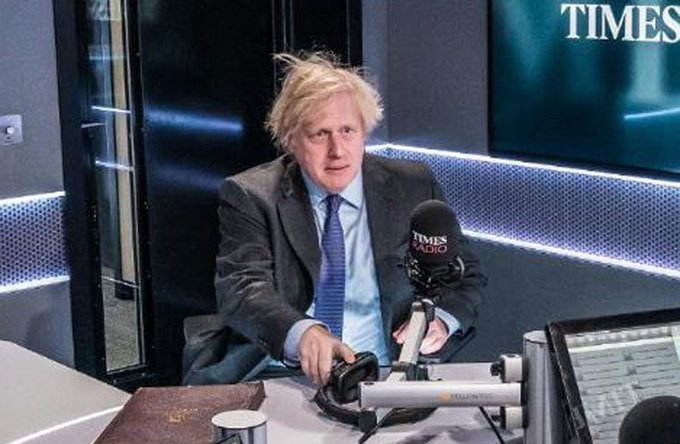
Although I'm still sticking with and enjoying Piers Morgan's brilliant deconstruction of the government's daily bullshit, I took time out on Monday for the launch of Murdoch's Times Radio and was particularly struck by the obsequious interview with our shambolic prime minister, and doesn't he personify an image perfect for radio?

Image

Of course there couldn't be a clearer signal of his disdain for the BBC Radio 4 Today programme as he hasn't put in an appearance there since last October and the boycott by government ministers continues. No mention of anything remotely tricky during this publicity stunt of course, such as Dominic Cummings' eye test, or indeed the disgraceful Jenrick property scandal with Richard Desmond. Oh look, Boris is clearly mates with Mr Desmond too:-   

Image

It's not just the Today programme though, BBC 2's Newsnight is still being boycotted, along with Channel 4 News with Matt Hancock refusing to appear for over three weeks. I think I'm right in saying Channel 4 News were refused all requests for questions at any of the long-running No 10 Covid 19 press briefings. 

Of course it is a vitally important element of any democracy that the Government is held to account not just by the Loyal Opposition, but by an independent and free media. It is nothing short of a disgrace that we the public are being treated in this way by Boris Johnson and his mediocre team of sycophantic ministers. But therein lies the reason for this childish and disturbing behaviour - they're simply not up to the job of coping with forensic questioning.

Take for example Good Morning Britain and the 55 day boycott by government ministers. I have no idea what Dominic Cummings thinks this will achieve, but viewing figures are continuing to grow and the BBC have recently started to play a game with GMB by suggesting they play video clips. As Piers Morgan put it, 'the Minister refuses our request for interview; they get a soft interview on BBC and tells porkies; we play the clip and call it out and then they go back on BBC and apologise. Not ideal, but so be it.' 

There was quite an interesting spat yesterday between Piers and Dan Walker over on BBC Breakfast to do with the Matt Hancock interview - basically Dan let the minister get away with the usual 'blather' and saying it wasn't really important to know how many people are being tested daily. It is of course, but the government have not published the figures since their trick of counting two swabs per person being counted as two tests was exposed. Piers is absolutely right - we are being lied-to on a regular basis and the government response is to boycott those who persistently ask difficult questions.

Now those who are familiar with Good Morning Britain will know that it's an ITV production now made at Television Centre, the former purpose-built home of BBC television. Because this is my blog, sometimes I feel able to go 'off piste' with the occasional indulgence and it gives me an excuse to briefly mention this amazing building and that it celebrated 60 years on Monday. It was a disgrace that the BBC ever parted company with this iconic structure, conceived as it was on the proverbial envelope way back in 1949.   

No photo description available.

Tales of Television Centre (With images) | London architecture ...

No photo description available.   

   Image may contain: drawing


No photo description available.


aeroengland | aerial photograph of the BBC Television Centre London UK