Saturday, 15 February 2020

Command and Control 2

I notice the following was published by Clinks yesterday:-

HMPPS restrictions on attendance at events 


Following the tragic incidents at Fishmongers Hall in November 2019, HMP Whitemoor in January 2020 and in Streatham in February 2020, Her Majesty's Prison and Probation Service (HMPPS) put in place a number of restrictions on people in the criminal justice system and on their staff’s attendance at events.

The recent incidents, in particular the one that took place at Fishmonger’s Hall, affected many individuals and organisations in our sector. The loss of life was also a loss of two individuals’ passion and belief in the potential in everyone and in the power of working together to help people to change. But this passion and belief lives on within our sector and we are therefore concerned that any response to these events from either the criminal justice system or our own sector, must be proportionate and not undermine access to services that support desistance and enable people to improve their lives. We are talking to HMPPS to help minimise the impact of these restrictions while also keeping people safe.

The restrictions imposed by HMPPS

1. Temporary suspension of Release on Temporary Licence (ROTL) for the purpose of attending public events celebrating offender achievements, and a corresponding suspension of permitting offenders on licence from attending such events.

2. Any such events hosted by HMPPS in a public setting, with planned attendance by prisoners on ROTL or offenders on licence, should not go ahead until further notice.

3. In cases where such an event in a public setting is hosted by a partner organisation, the decision about whether to cancel is for that organisation. However, where events do take place, HMPPS staff should not attend.

4. Internal HMPPS events within prison establishments may go ahead, subject to local risk assessment.

It is possible for Prison Group Directors or Probation Divisional Directors to request permission for events/event attendances to go ahead, by exception, by making a request of their Executive Director, who will liaise with the Joint Extremism Unit ahead of a recommendation going to the relevant Director-General.

Clinks understands that these restrictions are based upon intelligence and assessments by the Security, Order and Counter Terrorism Directorate and the Joint Extremism Unit. HMPPS’ purpose is to reduce the risk of further incidents as far as possible and to keep people safe. We are, however, concerned to ensure that they do not limit access to rehabilitative opportunities across a wide range of people within the criminal justice system or have implications which present a challenge to the sector’s commitment to involve experts by experience in the design and delivery of services. In particular, we are concerned that under these restrictions it is unclear what constitutes “public events celebrating offender achievements” and that this may impact a wide range of criminal justice voluntary sector activities, even if not the intention. We know from discussions with members and partners that there is a lack of knowledge of the restrictions and what may be required of organisations. Furthermore, there is confusion as to how these restrictions may be interpreted, reports of inconsistencies in interpretation and concern as to the longer-term impact if they remain in place for much longer.

We have raised these concerns with HMPPS and are in ongoing discussions with them to pass on feedback from our sector, help them to understand the impact of the restrictions and limit that impact wherever possible. We understand the restrictions will be reviewed in March and we will keep the sector updated with regards to this. Both I and Richard Nicholls, Clinks’ Head of Operations and a member of the Reducing Reoffending Third Sector Advisory Group (RR3), are meeting with the Director General in the next weeks to discuss concerns and seek further clarity.

HMPPS has assured us that they are absolutely committed to supporting rehabilitative activity in our sector and working with organisations facing barriers to their work in this period when restrictions remain in place. Colleagues at HMPPS understand that the restrictions articulated above can’t account for every eventuality so they are happy to receive queries and referrals about events from the sector. If you have questions or concerns about how these restrictions might affect your activities please contact directorgeneralprisons@justice.gov.uk or directorgeneralprobation@justice.gov.uk.

If you have concerns or questions you can also get in touch with us. Richard.nicholls@clinks.org is leading on issues around working safely in the sector and is the best first point of contact.

Anne Fox 
CEO Clinks

Friday, 14 February 2020

Command and Control

There was a time of course when notions of 'command and control' would have been complete anathema to any Probation Officer worth their salt, but they just love it at HMPPS HQ and it's coming soon to a CRC near you:- 

Probation Change Bulletin - Issue 4

1. Introduction – Probation Reform Programme Director, Jim Barton

Welcome to the first edition of our bulletin in 2020, keeping you up to date with the progress of the probation reform programme. Due to restrictions imposed during the general election campaign at the end of last year, we were unable to publish updates in November and December. Rest assured, work has been continuing at speed and the programme remains busy.

I look forward to providing further updates as we continue to make progress this year. If you have any questions or would like to contact the programme team please email: strengthening.probation@justice.gov.uk


2. Reflecting on 2019

2019 was a year of great progress for the probation reform programme. We started by listening to the outcome of the consultation (which received over 450 responses) on how we best strengthen probation before announcing the unified model in May. We then started to deliver on the model through the transfer of offender management staff from the Community Rehabilitation Company (‘CRC’) Wales to the National Probation Service (‘NPS’) Wales in December (see below).

The last three months of the year also marked some key milestones which I’d like to share with you. These included:

2.1 Launching Her Majesty’s Prison and Probation Service (‘HMPPS’) Strategy

The strategy, launched in November 2019, outlines the outcomes that everyone within HMPPS is focused on achieving. HMPPS is central to achieving three of the Ministry of Justice’s overall objectives:

  • Decent and safe prisons
  • Public protection
  • Reduced reoffending
Our probation reform programme is explicitly aligned to the overall objectives of protecting the public and reducing reoffending. Together with our workforce programme, it is intrinsically linked to the outcomes that the HMPPS Strategy is determined to achieve namely, building and maintaining a diverse, skilled and valued workforce and delivering high quality sentence management.

2.2 Launching the probation delivery partner competition

The first phase of expressing an interest in the delivery partner competitions and the launch of the competitions has started. Probation delivery partners are the organisations that will deliver Unpaid Work, Accredited Programmes and other Structured Interventions to the regions. There will be one probation delivery partner in each of the 12 new probation regions in England and Wales.

We very much hope that current organisations will express an interest in these competitions, but understand that sometimes this might not be the case. Regardless, there will be no impact on the quality of probation services that are provided to offenders, staff and stakeholders during the transition.

2.3 Appointing the regional probation directors

The programme continues to make great progress towards the launch of the unified model next Spring. that goal. I’m delighted that we have appointed the new team of 12 National Probation Service Regional Directors for England and Wales (11 for England and one for Wales). These new senior leaders are from a range of backgrounds and all have great experience of probation, both in the NPS and CRCs.

As they start to build their own regional teams, they will be working closely with the programme to implement change, develop best practice and lead probation services in their region. This is in line with our blueprint, published last June, with further details included in our draft Target Operating Model, which we plan to publish towards the end of February.

We were determined to appoint the right people to these important roles. The process was rigorous with a number of individuals involved, including Police and Crime Commissioners who sat on interview panels. The regional probation directors are:

Ian Barrow, Wales
Andrea Bennett, North West
Chris Edwards , Greater Manchester
Bronwen Elphick, North East
Lynda Marginson, Yorkshire and Humberside
Sarah Chand, West Midlands
Martin Davies, East Midlands
Steve Johnson-Proctor, East of England
Kilvinder Vigurs, London
Angela Cossins, South West
Gabriel Amahwe, South Central
Mary Pilgrim, Kent, Surrey and Sussex

2.4 Wales transition to the NPS unified model

The transition process in Wales has gone well and I’d like to express my thanks to everyone who has been involved. On 2nd December 2019, just over 300 staff in Wales moved over to the partially unified model for the probation service.

The transition has been a major achievement and a review of staff working needs, in terms of environment and IT resources, will ensure they are given the best support in their important and challenging roles. There are a number of lessons we can usefully learn, especially given that the scale and complexity for transition in England will be different.

2.5 Increased focus areas

Like any complex reform programme, there are inevitably a few areas that have taken longer to move forward with than we had hoped. One of these is the design of our Dynamic Framework. Our initial approach was to hold central competitions for each of the 12 regions. Following feedback from key stakeholders we have paused the launch and are adjusting our approach to ensure it’s more regionally tailored to what already exists.

NPS deputy directors are currently completing a gap analysis with their local partnerships to support this work. We have set up a new board to help our resettlement model align more closely with prisons, while the design work for a unified offender management system in the NPS is in its early stages and we’re keen to make quick progress on this soon.

3. Looking ahead to 2020

When we announced plans for the new probation model last May, we said that transition would occur in Spring 2021 and we have now settled on a specific date. Management of low- and medium-risk offenders will pass from CRCs to HM Prison and Probation Service in June 2021, allowing time to implement these complex changes safely. Therefore 2020 will be another busy year of engagement with staff and stakeholders and finalising the Target Operating Model.

Over the next few months, we will launch the first stage of the competition to appoint providers to the Dynamic Framework (smaller, more specialist local providers of pathway provision). From April we will begin the process of shifting the NPS from its current formation of seven divisions to 12 regions.

By the end of the year we will have completed that process and appointed all partner organisations that will support NPS regions in the future. Further details can be found in other areas of this bulletin. We will also commit to continuing to consult, engage and inform staff and stakeholders as well as with our trade unions on the progress in the programme.

3.1 The launch of the workforce programme

In January, HMPPS launched a five-year probation workforce programme. This is a parallel programme to the reform programme with a purpose to ensure the new unified service has the right staff in the right places at the right time, bringing together all the probation workforce areas currently sitting in different parts of HMPPS and the Ministry of Justice.

A key focus is to make sure all recruitment is diverse and inclusive, staffing level requirements are met, staff have the right qualifications, learning opportunities and professional career development plans and, overall, making sure our HR polices are fit for purpose. Ian Barrow, previously probation delivery director for the National Probation Service in Wales, has been appointed interim director for the probation workforce programme.

The programme, which sits alongside the probation reform programme, will be launching its workforce strategy towards the end of February. It will ensure that, as CRCs are integrated into the new unified model, there is a clear focus on supporting probation colleagues as they carry out new and challenging roles.

Amy Rees, Director General for Probation and Wales, said: “We made a commitment in the recent HMPPS Strategy and the People Plan that a strong workforce was an absolute priority for us to achieve our aims in the agency and in probation…I do not underestimate the scale of what lies ahead but we have a real opportunity here: to shape the direction for our probation workforce and create a lasting legacy for our valued staff.”

3.2 Publication of the draft Target Operating Model

Final work is being done on the interim Target Operating Model, which will be published in the next few weeks. This important document outlines how probation will be run from 2021, the structure of the future NPS and the processes that we are implementing. This follows the operating blueprint, published last June.

While there is still a huge amount of work to be done, gaps in design areas and many questions that still need answering, the Target Operating Model, clearly demonstrates the commitment of HMPPS to continue to drive the reform programme forward at pace to deliver for the public, probation staff and individuals under probation supervision.

3.3 Assistant Chief Officer events

Two engagement events with NPS and CRCs and the programme have recently taken place to refine the delivery structures for the 12 new regions and agree on the processes for staff transfer from CRCs to the NPS.

We anticipate the Probation Delivery Unit structures for regions will be announced shortly.

Thursday, 13 February 2020

Latest from Napo 200

From Napo news online last week:-

Napo meets with Justice Minister

Napo, alongside colleagues from our sister unions, met with Justice Minister Lucy Frazer this week. The meeting was overshadowed by the terrible incident in South London last Sunday, and it became quickly evident from the flurry of activity going on in MoJ HQ that we would have less time with the Minister than is usual.

Nevertheless, the delegation which included Napo General Secretary Ian Lawrence and National Vice-Chair Ikki Bhogal, was able to effectively engage with the Minister on a range of important issues on behalf of our members working in the NPS and CRC’s. Here we left Ms Frazer in no doubt that if Probation was already in need of a serious increase in funding to allow it to reach the standards expected of it, the Manifesto commitments of this Government in respect of the criminal justice system and the well documented events over recent weeks, made that even more of an imperative.

The discussions focussed on three key areas namely: Pay and the problems around the non-delivery of the pay protection agreements on E3, the ramifications of the latest report by the Chief Inspector for Probation and the Governments policy on privatisation. Here, the unions again urged a rethink on the re-marketisation of Interventions and Programmes and demanded the cessation of the failing contracts for the provision of double waking night cover in Approved Premises.

On pay, we made strong representations to the Minister and Amy Rees Director General of Probation, that unless serious action was taken to improve funding then there was no chance that it would be possible to re-stabilise the service which is still in recovery mode from the disasters of the Transforming Rehabilitation Programme, or incentivise new recruits to see Probation as a worthy career that paid its staff a decent wage.

The Minister responded positively, in that it was clear that serious dialogue is going on inside HMPPS and with the Treasury on a number of priorities and it was acknowledged that the Governments plans for more police officers, more prison places and longer sentencing would need an increase in probation practitioners as well as the resources to support them.

Ms Frazer agreed to formally respond to the unions joint letter that had been sent in advance of the meeting and welcomed the publication of the correspondence. It is hoped to meet again once decisions have been made around the Governments ongoing Comprehensive Spending Review.

Tuesday, 11 February 2020

TR According to Chris Grayling

I notice the Institute for Government have published an interview with Chris Grayling about his time as Minister for Justice and hence responsible for the omnishambles that was TR:-

Tim Durrant (TD): You worked in a number of roles in the shadow cabinet before the 2010 election. Did they inform your time in government?

CG: Yeah, basically the jobs I did in government and the jobs I did in opposition married up almost totally. I was in the Home Office rather than in justice, but basically the jobs I’ve done in government have been the jobs I did in opposition, so there’s been a very close correlation. In none of them have I turned up as a total stranger.

Nick Davies [ND]: In September 2012, you became secretary of state for justice and lord chancellor. Can you talk us through the appointment process, the conversation you had with the prime minister, whether it was something you were expecting?

CG: I thought it was quite a good possibility because there was a lot of commonality with the reforms I’d been talking about [at DWP]. The coalition agreement envisaged a fairly similar approach in employment and in the rehabilitation of offenders. I had not been involved in shaping the justice piece in opposition, but I had been involved in shaping the work and pensions piece in opposition, so there was an obvious correlation between the work I’d been doing in DWP and the work David Cameron asked me to do in justice. And David Cameron gave the standard, you know, “come along, see the prime minister,” and he said, “I’d like you to go to justice.” He gave me two instructions, he said, “firstly, I want you to deliver the rehabilitation revolution commitment in the coalition agreement,” because his view was that it hadn’t really been delivered. Both the Conservative manifesto and the coalition agreement envisaged a significant outsourcing of the rehabilitation of offenders. And he also said, “I want you to get rid of the soft justice narrative,” which had been quite visible in the previous couple of years.

ND: What lessons did you take from overseeing the work programme to the implementation of TR [transforming rehabilitation]?

CG: I think the big difference between the two, both big reforms, both requiring a little bit of tweaking once they got up and running, is that in the case of the DWP, the team who had set up the work programme were still there. Whereas in 2015, pretty much everybody who had been involved in the transforming rehabilitation programme left. The ministers all left, the senior officials all left, and it did not get the tweaking and fine-tuning that it needed. In both cases, in the case of the DWP and the MoJ [Ministry of Justice], the statisticians got their numbers wrong. They misjudged the number of referrals that the third-party contractors would get. In the case of the DWP, they were able to make early adjustments to the contracting structure to make sure that wasn’t an issue, and by the time the programme finished, an analysis in 2016 said it had outperformed the expectations of the department based on previous programmes, and at a lower cost than previous programmes. With transforming rehabilitation, from what I could see, they sat there like rabbits in the headlights, saying: “Well, I don’t quite know what we do about this.” The referrals were much lower than expected to the outsourced companies, whose business models then were fatally weakened from the start, and they didn’t make the adjustments they needed to make earlier on.

ND: Knowing what you know now, is there anything that you would do differently to avoid some of those problems?

CG: Yeah. I think, with hindsight, it’s an interesting problem. Arriving halfway through a parliament with a mandate to deliver major reform sets you, to some extent, a timetable. You might think two years and nine months was more than enough to deliver reforms, and in most worlds it would be. But the public sector moves pretty slowly and there’s huge amounts of process involved. I would probably have done it in stages, I wouldn’t have just done one pilot in one part of the country. Because for transforming rehabilitation there had been a pilot in Peterborough of outsourcing the support of offenders to the private and voluntary sectors, which had a measurable impact on the level of re-offending. But I’d probably have done it in two or three stages.

ND: What was the advice from the civil service like on the programme?

CG: Oh, they were very hard working on it. There is a myth floating around that the civil service advised against it, which is not true. The civil service, at all stages, was very, very engaged in delivering it.

ND: More generally, what are the key challenges entailed by taking the step up from minister of state to secretary of state, and what was the support like for you from the civil service when you moved up?

CG: Pretty good. I think the key difference is you suddenly take on financial responsibility in a way that you don’t necessarily as minister of state. The financial position at the Ministry of Justice was very challenging. We had to take out something like a third of the budget over a three-year period. That was implementing reforms that Ken Clarke [the previous secretary of state for justice] had legislated for but not done, so most of the cuts in legal aid had been legislated for before I arrived but came into force on my watch. So, the budget pressures were enormous. Actually, one of the great hidden facts about probation is that the probation reforms insulated the probation service from what would have been significant budget cuts, because we were looking to expand the remit of the probation service to incorporate all the short-sentence prisoners. The Treasury did not insist on significant cuts in the way they did with the prison service, legal aid and the courts. So, I think the dominant feature of my time as secretary of state for justice was huge budget pressures. One of the great ironies, which wasn’t spotted at the time, was that because Michael Gove [Grayling’s successor as secretary of state for justice] was due to be George Osborne’s campaign manager in his leadership bid, when Michael took over as secretary of state the department’s budget went up by £500m, which took away a lot of the budget pressures we’d been dealing with in the last 12 months.

ND: Given those pressures, what was your approach like in managing a team of ministers and how did you go about identifying priorities for the department and the team?

CG: Well, the first thing I did was decide to not privatise the prisons. What I inherited from Ken Clarke was a rolling programme of prison privatisation but, looking at the plan, it was very clear to me that whilst it theoretically delivered savings, those didn’t arrive until the mid-2020s, which wasn’t a lot of use for us back then. I had bids from the private sector, but I also had a counterbid from the in-house team, from prison governors and prison unions, to run the prison service according to a different template. They took what they saw as best practice from across the estate and applied it to the prisons that were in line for privatisation, saying: “We can deliver for you.” The savings were smaller, but they were more immediate. So, the decision I took was to stop the privatisation process of the prisons but to say to the governors, “what I need you to do is to put in place the benchmarking that you’re talking about for these prisons more broadly across the estate, because that’s the only way I can meet the financial targets without really driving aggressive privatisation,” which I didn’t think was right.

ND: You mentioned the injection of cash the department received under Michael Gove. Can you describe what relations were like between you and Number 10, and the Treasury, during the time you were at MoJ?

CG: Generally, pretty good. Probation reform, as far as Number 10 and the Cabinet Office were concerned, was a priority. I mean, Nick Clegg described it in one cabinet meeting as one of the most important reforms the coalition was doing. This was a fairly fundamental part of the coalition agreement, the rehabilitation revolution, and so Number 10 was always very keen and positive about it. The Treasury was fine and helpful but process; everything takes a very long time.

TD: What would your advice be for ministers dealing with those two parts of government, the Treasury and Number 10?

CG: Try and remain friendly with everyone. I don’t believe great bust-ups in Whitehall help. Understand where they’re coming from, have good relations with the other ministers. Although it does annoy the civil service sometimes when ministers phone each other up and agree things without the civil service being present! But just maintain good relations all around, would be my best advice.

TD: You mentioned earlier you’d visited a large proportion of the prison estate. What can you take from those visits as a minister, how does it inform your decision making in Whitehall?

CG: Well, what it does is it shows you the reality of life on the ground. For example, you are always dealing with accusations that the prison estate is overcrowded. I mean, in all the briefs I’ve had there’s usually a relentless attack from the left, who want the world to look very different. If you’ve done a walk around the prisons to see what it’s like and you’re told the prisons are hideously overcrowded, well yes, it is true that we did not provide a single cell for every prisoner, but it would have been impossible to do so. So, the question is, are we putting people in completely inhuman conditions, given these are prisons? And most of the estate was, in my judgement, sufficiently okay to be justifiable. Some of the older estate improved very little. In fact, I closed more prisons than any other justice secretary has ever done, or home secretary has ever done, and some of the ones I closed were a problem. There was one on the Isle of Wight in particular that I went around and thought: “I’m glad I’ve closed this because it’s not fit for use as a prison.”

Monday, 10 February 2020

Sad Result of a Bad Decision

We've talked about Circles of Support and Accountability before and the incredulous decision by NPS/MoJ to cease funding it. It was all tied-up with the TR omnishambles and in my view is yet further evidence of why probation should return to being a stand-alone service, funded nationally but organised locally. Here, on the Clinks website, is the back story to the complete closure of a once brilliant concept and successful initiative in the North of England:-

The end of the road - lessons and reflections from a charity preventing sexual harm

In this guest blog Tammy Banks, former CEO of re:shape, talks openly about the recently closed charity and what led to its demise. She discusses the rising need for the charity’s services – preventing sexual harm – the commitment of its workforce, and the challenges of the funding environment.

I have recently closed down a charity doing excellent work because statutory services are in disarray. re:shape was an organisation that used volunteers to prevent sexual harm, working with hundreds of volunteers across Yorkshire, Humberside, Lincolnshire, Cumbria and Lancashire. It was a community project which transformed people’s lives and prevented people becoming victims.

re:shape worked positively with people who were a risk of causing sexual harm or who had already caused harm. They had been through the criminal justice system and were released back into the community, but were still assessed as being a risk. I saw a rapid rise in the demand for the service over the six years I was CEO. Our referrers were the National Probation Service, the police, prisons, local authority, NHS, charity projects, religious communities, parents and even individuals themselves. Volunteers gave thousands of hours every year to the charity. Interventions were independently proven to prevent further offences by nearly 80%.

I joined the organisation just as Transforming Rehabilitation was being implemented. My brief was to survive the year (or two) it would take to embed the new way of working. We scrimped and scraped by with charitable funding plugging the gaps, whilst statutory funders tried to get systems in place. We navigated complex statutory relationships where we often knew things about their internal workings before they did; where senior managers, the Ministry of Justice (MoJ) and other commissioners hadn’t told their operational staff about the internal changes they were making.

At the same time as this was happening, the country – and the world – appeared to be waking up to some of the realities of sexual abuse. The media was helpful in some cases by breaking down stereotypes and highlighting the abuse that was happening in organisations, the collusion and the fact that it generally isn’t the stereotype of old men in parks abusing children. #Metoo happened. Other high profile cases stunned the country and we suddenly saw another rise in the people wanting to access our services. Amazingly, we also received enquiry after enquiry from people wanting to volunteer. We built an army of trained, informed people, dedicated to preventing sexual harm and working towards no more victims locally.

The incongruence is almost laughable! People’s needs were increasing, understanding of our services was increasing, while funding was decreasing. Applications to our usual funders who have been so supportive in the past were met with sad and resigned no’s. They said things like, “your work should be funded by statutory services, we’ve subsidised it for 10 years already”, and “There are other charities that need our money and we need to distribute our limited funds fairly.”

At the same time, we were being asked by statutory funders to develop more flexible services – to amend our approach to work with more people – giving us small amounts of money here and there. Probation started looking into national commissioning for us and other intervention providers because the work was so valued. There is nothing else like it and it works – it prevents victims.

We continued developing, increased our impact and grew the most amazing, professional, skilled and dedicated staff team and hundreds of volunteers. The difference we were making was tangible. It was real, it was preventing victims. Then we received the news: there would be no national funding. The MoJ had made its decision and the decision was final. We received a letter saying they recognise the importance of the services we were offering but that they had re-routed the money elsewhere. We were asked to apply locally and to go on the Community Rehabilitation Company rate cards.

This meant four more complex organisations to engage with and months and months of inconsistent messaging and processes. All the time, during this uncertainty, fantastic staff and volunteers were still delivering interventions, working with some of the riskiest people in the community, helping people transform their lives, being part of the change and making a difference – working collaboratively towards the mission of no more victims.

We literally tried everything to survive: fundraising, small grants, large grants, local commissioning and national commissioning. At every juncture there was hope and we continued in hope, whilst watching our reserve funds dwindle away.

A couple of years on and the momentum that was built around truly preventing sexual abuse has nearly silenced. The media isn’t bothered anymore as Brexit has taken over. People’s heads are turned and they’re focused on other situations which are also very concerning. The probation service is going through reform again. Perhaps they’ve realised Transforming Rehabilitation was a mistake. Perhaps they’ve listened to all the dedicated frontline probation professionals who proclaimed that these radical reforms were devastating, and who shouted it from the rooftops six years ago.

Of course, sexual abuse continues. It’s an unfortunate fact that instances are rising and rising fast. Convictions are lower than ever before and the talk of culture change, abuse of power and standing together is growing weaker by the day. If we look at the situation from a cold monetary perspective, the current situation isn’t good for the public purse. Sexual abuse impacts everywhere: the victims, their families, the local communities, NHS services, courts, police, prison, social care, mental health services… and let’s not forget that trauma can impact a family’s ability to thrive for generations.

I look at the criminal justice system in absolute despair. Operational professionals in the system are under immense pressure. They’re trying their best whilst the whole system works against them. I’ve watched good service after good service close these last few years. Services that absolutely change people’s lives, prevent abuse and champion change… and now it’s us. I’m watching colleagues and friends in the sector near collapse and good people leaving through fear for their own mental health. What are we going to be left with?

As a country, I’m so worried about the future. I’m holding on tight to the fact that, in the last ten years, our dedicated volunteers have done amazing things. They’ve absolutely prevented hundreds and hundreds of victims and I’m sure that their training and experiences will have had an impact on their values and understanding. I think this is true of many partner agencies that we have worked with and trained too. I’m pleased to say that a selection of our services will be continuing under the umbrella of other organisations, but unfortunately many areas, including all of Yorkshire, will have no service available.

I am truly thankful to the wonderful trustees, who gave up their time and used their skills and expertise for further impact. Quakers gave us our beginning and our principles and, over the years, this has led every single decision towards our aim of ‘No more victims’.

We are at the end of the road now. We will be putting all our intellectual property as a free download from March at www.re-shape.org.uk. Please take and utilise what you wish. I hope it continues to help prevent sexual harm in the future.

Tammy is on Twitter at @tammybanksy, on LinkedIn, and can be contacted by email at Tammy@tayetraining.org.uk.

Tammy Banks
Re:shape (formerly YHLCOSA)

Saturday, 8 February 2020

The Power of Discussion and Debate

Blimey, yet another official report highlighting in some shocking detail the terrible state of our prisons and the very poor management by HMPPS, this time from the National Audit Office:- 

Improving the prison estate


This report examines the condition and capacity of HM Prison and Probation Service's prison estate.

Background to the report

Since 2015, against a backdrop of worsening living conditions for prisoners, HMPPS (Her Majesty’s Prison and Probation Service) has changed the way in which it maintains prisons and launched a programme to improve the condition and suitability of prison accommodation. It opted to contract out facilities management, create 10,000 new-for-old prison places and change its estate to better meet the needs of prisoners.

Content and scope of the report

This report examines how HMPPS handled these changes and what it achieved. It:

  • sets out the condition of the estate and the capacity within prisons to accommodate the prison population;
  • examines HMPPS’s approach to managing the maintenance of its prisons; and
  • assesses HMPPS’s performance in transforming its estate by building new prisons, selling unsuitable prisons and reorganising prison places.
Report Conclusions

HMPPS has committed to providing a safe, secure and decent prison estate, but its plans to achieve this are failing. It has not been able to provide enough prison places, in the right type of prisons, and at the right time, to meet demand. The Prison Estate Transformation Programme’s plans to create up to 10,000 new prison places to replace ageing, ineffective prisons proved undeliverable and outsourcing prison facilities management has not delivered expected efficiencies. If successful, these initiatives could have made a difference, but as it stands the prison estate is not meeting the needs of prisoners or those working in the prison system. It represents poor value for money.

HMPPS is taking welcome steps to improve its understanding of the condition of the prison estate, and now better understands the significant gap between its ambitions and the available resources. Learning lessons from its experience in delivering the programme will be crucial as it responds to the government’s new commitment to create 10,000 new prison places. But HMPPS must resist a reactive approach and put its long-term plans on a secure footing. Achieving value for money will ultimately depend on HMPPS working with the Ministry and HM Treasury to develop a long-term, deliverable strategy that will provide a prison estate that is fit for purpose.

--oo00oo--

This from the Guardian:-

Two in five prisons in poor condition, watchdog finds

Report says a backlog of major repairs will cost £916m as safety breaches reach a record high


The government is failing in its efforts to improve prison conditions, with record levels of safety breaches and “huge” backlogs in repairs, Whitehall’s spending watchdog has found. The National Audit Office said plans to “provide and maintain safe, secure and decent prisons” had not been carried out.

A report released on Friday found that safety in two out of every five inspected prisons were rated as poor or “not sufficiently good”, with recorded problems at an all-time high. Over the last decade, the Prison and Probation Service (HMPPS) has taken 1,730 cells permanently out of use and it expects to lose another 500 places every year because of the poor conditions of the remaining estate, the NAO said.

In the next three years, 41% of prisons need major repair or replacement work. There is currently a backlog of repairs that will cost £916m to fix, according to the report. The prison population in December was around 82,300, equating to 98% of its capacity.

The report comes as ministers aim to pass emergency legislation to block the automatic early release of convicted terror offenders, which is likely to put further pressure on the prison system. The move follows three attacks in recent months by men convicted of terror offences, including the stabbing on Sunday of two people in Streatham, south London.

Responding to the report, Meg Hillier, chair of the public accounts committee, said the ministry had failed once more to oversee outsourcing firms or get to grips with management of a crumbling estate.

“As with probation reforms, the ministry has not got outsourcing right. Provider performance has been poor and planned savings failed to materialise. The ministry is on course to deliver just a third of previously promised places. The government say they want people to serve more time, but soon the prison population could exceed capacity. As the Streatham attack highlighted, the Prison and Probation Service urgently needs a long-term plan to improve our prisons and will need the funding to do this.”

In 2015, HMPPS outsourced management of prison facilities to Amey and Carillion, expecting to achieve savings of £79m, but had an inaccurate and incomplete understanding of the condition of the assets, the report said. “Due diligence was not sufficiently robust and HMPPS severely underestimated the demand for reactive maintenance work arising from vandalism and failing assets.” HMPPS expected to pay providers £17.7m for variable costs by 2018-19 – the fourth year of the contracts – but has paid £160.4m, according to the latest findings.

The government has “struggled to create new prison places”, with only 206 built and 3,360 under construction out of 10,000 new for old places it committed to create in 2016. “The main reason behind these failures was the delays in agreeing and receiving funding to build new prisons. This meant construction work began later than planned,” the report said.

It recommended that HMPPS develop a long-term strategy on condition standards and minimum levels of investment. Gareth Davies, head of the NAO, said: “The government has recently committed to creating 10,000 new prison places and needs to learn lessons from its recent experiences.”

The Ministry of Justice said it “recognised” the need to invest in maintenance and safety and pledged to spend £256m more to carry out improvements over the coming year. A spokeswoman said: “We will always have enough prison places to keep offenders behind bars, and the government’s £2.5bn investment will create 10,000 modern places, on top of the two new jails already being built.”

--oo00oo--

National Audit Office report on improving the prison estate

Commenting on the findings of today’s (7 February) National Audit Office report on improving the prison estate, Peter Dawson, director of the Prison Reform Trust said:

“This startlingly frank report says that the government is failing to provide safe, secure and decent prisons. It describes in forensic detail how a succession of plans have disintegrated almost as soon as they have been announced, resulting in a failure to build new prisons, or close old ones, or maintain the current prison estate in a useable condition. To cap it all, there is no plan in place for the future.


“Scarcely a week passes without another high profile announcement of longer sentences or delayed release dates, despite the absence of any evidence that more imprisonment does anything to deter or reduce crime. This report exposes the recklessness of that approach, sending people to a prison system that shames us as a country, and all too often serves only to entrench the behaviour it is supposed to change.”


--oo00oo--

From BBC website:-

Meanwhile the National Audit Office has found the government has so far only increased prison places by 200, despite a pledge in 2016 to deliver 10,000 places over four years. The NAO's report said the building programme was delayed because of disagreements about funding. It found 3,000 places were still under construction.

There are currently more than 83,000 people locked up - and the number is forecast to increase. The report said analysis by the Ministry of Justice (MoJ) showed that from October 2022, demand for prison places could begin to outstrip supply, as an increase in police officer numbers potentially leads to more offenders being caught. Further pressures are expected because of sentencing reforms, with the most serious offenders spending longer periods behind bars. The NAO report also criticised prison conditions, with poor safety reaching "record levels" and "huge maintenance backlogs".

Ministers have announced a new £2.5bn prison building programme but the NAO said no timetable has been set and the 10,000 places which they have again promised may not be enough to keep up with the expected rise in the prison population. The Ministry of Justice said it recognised the need to invest in maintenance and safety and pledged to spend an additional £256m to carry out improvements over the coming year.


--oo00oo--

So, yet more confirmation of a pretty grim picture of very poor management by HMPPS, of which probation is of course part and regular readers will be aware I'm strongly of the opinion that if this vital public service is to survive and be useful, it must break free of the dead hand of civil service control and return to being independently run. 

I want to end this post by making an important point and it concerns the degree of traction that probation practitioners can still exert despite official attempts to stifle discussion and debate within NPS. The following is from an email I received yesterday from the NAO and I hope they will not mind my quoting from it:- 

"Dear Mr Brown, 

The National Audit Office has today published a report on Improving the Prison Estate which we hope will be of interest to your subscribers. You can find a link to our report here: https://www.nao.org.uk/report/improving-the-prison-estate/

We have found your blog to be an excellent source of information on developments in probation and prisons sectors, particularly in terms of canvassing a broad range of perspectives from practitioners on the ground.

You may be interested to know that previous discussion threads on your blog helped to inform our approach to data collection and fieldwork for our value for money study on Transforming Rehabilitation: Progress Review which we published in March last year. This, combined with insights from our focus groups with probation officers, culminated in Figure 4 of the report which examined workload rates across different National Probation Service sub-regions."


Readers will recall it was that NAO report that put the final nail in the coffin marked TR and as discussed here. 

Friday, 7 February 2020

A Picture Worth a Thousand Words

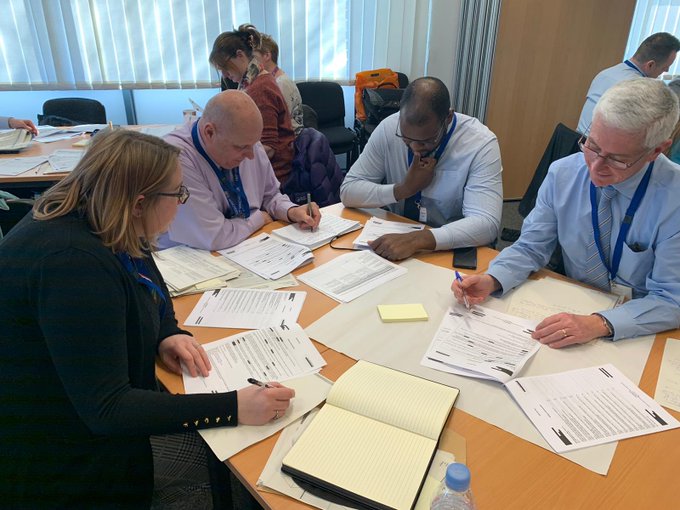
On the very day I suggest that it really is all over and 'probation' as many of us know it has been strangled under NPS civil service command and control, Twitter and the NPS heirarchy delivers us the following tweet complete with photo. What exactly are poor over-worked and stressed-out staff supposed to draw from such a message? Inspiration? 

We all know OASys was the best way yet invented by man to both waste as much time as possible to absolutely no useful end, and in the process drive the poor bloody author to lose the will to live. It pretty much destroyed the skill inherent in report-writing and effectively chains probation staff to their data input desks for 70% of their time. While we're at it, note how, in a Service dominated by young female practitioners, it's suited men poring over the bloody forms as well.        

Image

Exploring the new OASys quality assurance framework at OMiC workshop in Worle today.

*****
Jim - I reckon you're right on the money with your observation: "I'm rapidly gaining the impression that probation service staff must have been sufficiently cowed, purged, bullied and silenced under the dead-hand of civil service bureaucracy and central command and control by HMPPS."

*****
Jim - having read today's blog & some of the posted comments I think it really IS all over now. So it looks like the truly nasty amoral political class have finally succeeded in their efforts to eliminate the remnants of what was a free-thinking, independent, humanitarian vocational profession by slicing & dicing, ducking & diving, slipping public money into the greasy palms of unscrupulous profiteers, and getting HMPPS to tailor a bespoke political straight-jacket for the NPS, i.e. the Civil Service.

If you build it, they will come: "My message to anybody who dislikes the NPS so much that they want to 'fight' is that they need to leave... if you're paid to do a job then your employer has a right to expect you to do as you're told." If I were to write the book it would be entitled "When Advise, Assist & Befriend became J.F.D.I."

*****
We are trained to challenge, confront and change offending (and offensive behaviour) but are we expected to simply bow, scrape and tug our forelocks to those who claim to be in control but who have driven the ship onto the rocks. Sometimes I despair.

*****
Totally agree and on both points. We are treated like disposable robots now, numbers and god forbid we display the very skills they incorporated in training. We are professionals in a so called career with degrees and [not] those without experience and responsible decision making. Why should we then simply shut up and follow mis-management and organisational bullying and accept the stress and blame culture they place on us? Are we not supposed to be honest and fair people by nature of wanting to do a job working with others?

Thursday, 6 February 2020

Is It Really All Over?

Given the ongoing and worsening crisis in our prisons, largely brought about by Chris Grayling who of course was also responsible for wrecking the former gold-standard Probation Service, I'm surprised there hasn't been greater mention of the Offender Management in Custody (OMiC) project of late? I'm rapidly gaining the impression that probation service staff must have been sufficiently cowed, purged, bullied and silenced under the dead-hand of civil service bureaucracy and central command and control by HMPPS.   

Lets be clear about this. Distinguished former governor and academic John Podmore, writing in the Daily Telegraph has this to say about HMPPS, of which Probation is now part:-
"But it is a closed world of secretive accreditation and no evaluation, led by people who have only ever worked in the prison service. Outside specialists in counter terrorism, Islamic fundamentalism, drug treatment, sex offender treatment, psychiatric and psychological therapy are eschewed - and heaven forbid we involve ex-prisoners or terrorists offenders who have turned their lives around and have a valuable contribution to make. Similarly, those with law enforcement skills and competencies are also detached from efforts to combat serious organised crime in prison and the corruption that underpins it. 
Prison service culture is one of insularity and defensiveness - and very little visible leadership. Despite a burgeoning bureaucracy, ministers either micro-manage ineffectively, or accept platitudes from officials instead of holding them to account. This cannot continue." 
The Probation Service should never have been part of this outfit; its culture and ethos is completely different, so are we to understand the absence of a clarion call for separation and re-establishment of a distinctive probation identity is over? Have NPS staff really accepted all the trappings and Blue Light discount card nonsense that goes with this dysfunctional and inappropriate outfit and are happy with it?

--oo00oo-- 

Our outdated prisons have descended into mayhem. Here's how we can turn things around

Our prison and probation services have sadly become chaotic institutions which succeed only in making people worse.

During their incarcerations, prisoners acquire drug habits, experience radicalisation and deteriorating mental health. Serious organised crime is seriously well organised behind prison walls and "imprisonment as a means of incapacitation" has become a myth perpetuated by politicians. If we measured the crime rates inside prisons, we would surely categorise them as crime hotspots in their own right.

There is good work and there are dedicated professionals in our jails but we are asking the impossible of them in the current set-up. Former Secretary of State for Justice, Chris Grayling gets some well-deserved blame for the chaos but the problems have run deeper for over a decade.

The establishment of a Ministry of Justice under New Labour was a logical step but it failed because of poor leadership and, latterly swingeing financial cuts on everything from legal aid to prison officers. We have tried to get a criminal Justice System on the cheap and it has failed.

The system is crying out for more funding, some of which has been forthcoming, and yet the signs are that it will be poorly targeted: Titan jails in the middle of nowhere rather than resettlement prisons in communities; 20,000 police officers but no youth workers. We lock up too many people for ever-longer periods and as they deteriorate they either fail the tests of the Parole Board for release or are quickly recalled to prison when they return to the chaos they left behind. But of the 85,000 people in prison, who really needs to be there? We should lock up those we are afraid of, not who we are mad at.

The prison system is predicated on the Mountbatten Report of 1966, following the escape of Great Train Robbers, Ronnie Biggs and Charlie Wilson and the spy, George Blake. The configuration of the prison estate with its categories A to D has changed little since, while the prison population has become ever more complex. We have a system designed for white, adult men but required to look after those with poor mental health, addictions, the elderly, serious organised criminals, TV licence non-payers, abused women and disturbed children.

Within the mayhem is poor care, ineffective treatment and financial waste. For the difficult, damaged, chaotic and disordered we need to look for community solutions and deal with them in local prisons where the emphasis is on social inclusion not security, and which is run by managers with experience in health, social care, employment and education rather than career civil servants. This group is the majority of those we incarcerate, probably two-thirds.

The remaining 30,000, those posing a real threat to the community need a separate system with secure containment and interventions. Prison is an opportunity to intervene and while there will always be a few who won’t change we should ensure they do not infect or harm others, staff or prisoners, inside or out. Such a ‘Federal’ or ‘National’ prison estate needs no new buildings, our existing eight High Secure prisons are an appropriate starting point for the most serious offenders.

What we do in such jails needs careful thought and planning, research and evaluation. For now the prison and probation service has its own treatment industry delivering a range of programmes inside and out ranging from de-radicalisation and sex-offender treatment through to anger management.

But it is a closed world of secretive accreditation and no evaluation, led by people who have only ever worked in the prison service. Outside specialists in counter terrorism, Islamic fundamentalism, drug treatment, sex offender treatment, psychiatric and psychological therapy are eschewed - and heaven forbid we involve ex-prisoners or terrorists offenders who have turned their lives around and have a valuable contribution to make. Similarly, those with law enforcement skills and competencies are also detached from efforts to combat serious organised crime in prison and the corruption that underpins it.

Prison service culture is one of insularity and defensiveness - and very little visible leadership. Despite a burgeoning bureaucracy, ministers either micro-manage ineffectively, or accept platitudes from officials instead of holding them to account. This cannot continue.

The prison service has built its own walls to resist the winds of change, it’s time we built windmills.

John Podmore is professor of Applied Social Sciences at the University of Durham. He is a former governor of Belmarsh, Swaleside and Brixton prisons.

Wednesday, 5 February 2020

Collective Denial

Another day and another organisation analyses and highlights the shocking state of our prisons in a new report. It's news to me that the Royal United Services Institute has in interest in these matters, but hey ho, why not? The report highlights yet again significant problems within NPS that hardly bodes well for a successful 'reintegration', but there seems to be collective denial over that one, as well as politicians stating being in prison prevents crimes being committed! As was stated recently by a highly respected former governor, every crime under the sun is committed in prison, they just don't get recorded.  

England and Wales' Prison Service in Crisis

New safety in custody statistics in adult and youth prisons underline the crisis in our offender management system

The prison system in England and Wales is in crisis. Self-harm in prisons is at a record high, with worrying spikes in violence over the past 12 months. The National Probation Service is struggling to provide adequate rehabilitation and community supervision services to offenders post-release, with staff shortages meaning that most staff are failing to meet their weekly caseload targets. The government has now made it a priority to create thousands more prison spaces. But unless substantial resources are also invested both in prison safety and the services available to offenders post-release, these measures will do little more than place thousands of offenders into a dangerous and violent environment, with little prospect of rehabilitation or reform.

On 30 January, the Ministry of Justice released new ‘safety in custody’ statistics covering deaths, self-harm and assaults in the prison system. The number of individuals self-harming in prison in the 12 months to September 2019 is now at 12,740 – the highest recorded figure. In that period, there were 61,461 self-harm incidents (a rate of 742 per 1000 prisoners), up 16% from the previous 12 months, and also a new record high. In female establishments, these figures are particularly shocking: a rate of 3007 incidents per 1000 prisoners represents an increase of 18% in the last 12 months. Most concerning of all, in ‘youth estate’ – 15- to 18-year olds in Young Offender Institutions and all 15- to 17-year olds in Youth Prisons – there was a 93% increase in self-harm incidents in the 12 months to September 2019 (from 551 to 1,062 incidents). Incidents requiring hospital attendance increased from 2.5% in the previous 12 months to 4.8% in the 12 months to September 2019.

As worrying as these 12-month figures are, there is more cause for concern when these figures are viewed in a longer-term context. The four graphs below illustrate this point.
Prisons Total Deaths

Adult prisons self-harm rate

Self-harm youth prison rates
Total assaults
Figure 1 displays the 10-year trajectory of the rate of deaths per 1000 prisoners from 2009 to 2019. In 2009, this number was roughly 2.0, and by 2019 it had risen to around 3.6. With self-harm in adult prisons, Figure 2 illustrates an almost linear increase from 300 incidents per 1000 prisoners in 2009 to 742 per 1000 prisoners in 2019. A similar story presents itself in Figure 3 with youth self-harm rates over 6 years. Assaults that had decreased by 2% to 33,222 in the 12 months to September 2019, are shown in Figure 4 to have risen from a rate of around 190 per 1000 prisoners in 2009 to 400 per 1000 prisoners in 2019.

The information outlined here poses serious, urgent challenges for government. Last August the Prime Minister promised to create thousands more prison places in a system currently operating at 98% of capacity, supported by Justice Secretary Robert Buckland QC’s insistence that ‘more and better prison places means less reoffending’. This directly contradicts the Ministry of Justice’s (MOJ) own research (backed by previous Justice Secretary David Gauke), which suggested that ‘sentencing offenders to short-term custody with supervision on release was associated with higher proven reoffending than if they had instead received community orders and/or suspended sentence orders’.

The most recent MOJ statistics show that the proven reoffending rate for adults released from custodial sentences of less than 12 months was 62.7%. Far from reducing reoffending, the majority of people imprisoned for less than 12 months will offend again within a year. The recommendation for sentences less than 6 months to be abolished was promptly ignored by the Prime Minister, setting the tone for an agenda on crime and prisons policy that has side-lined rehabilitation and re-integration.

But the problems run much deeper than the prisons system. The probation service is also failing to provide adequate services to offenders once leaving prison, meaning many remain locked in the cycle of re-offending. A recent inspection report from HM Inspectorate of Probation found that adoption of ‘accredited offending behaviour programmes’ – these are programmes judged by a panel of independent experts to satisfy principles of effective rehabilitation – had substantially decreased. Alongside this, caseworkers were found to be lacking in support from HM Prison and Probation Service to understand individual characteristics of offenders and incorporate these insights into their programmes. This, in turn, has repercussions on which programmes end up being authorised in the first instance, and on the extent to which those programmes are seen as accessible by the offenders that they are targeting. The report also confirmed the worrying anecdotal evidence increasingly coming to light concerning staff well-being in the National Probation Service (NPS). Over 60% of staff have caseloads exceeding the recommended maximum, while new recruits are being allocated complex cases without the skills or experience to manage them – partly explaining the significant problem of staff retention in the NPS.

In January two new statutory instruments were brought before Parliament, proposing significant changes in the management of serious violent and sexual offenders. Specifically, the proposed legislation will require offenders to serve at least two-thirds of their sentence in prison (as opposed to half-way release), before they are subject to strict licence conditions upon release. While the authorities are still to release further accompanying details, it appears doubtful that these punitive measures will align with additional investment in community supervision, rehabilitation and re-integration programmes.

A combination of extreme workloads and reduced capacity has abetted the mismanagement of offenders in the criminal justice system and created a climate of distress where the conditions for increased deaths, self-harm, and assaults in prisons are rife. This inherently damages the chances of offenders embarking upon a journey of self-improvement once entering the criminal justice system, thereby increasing the likelihood of further reoffending upon release.

Simply creating more prison spaces is unlikely to address these issues, unless this is accompanied by substantial resource investment in programmes focused on the rehabilitation and re-integration of offenders both while in prison and post-release. It is only by first understanding what methods of offender management work with which offenders, why they work, in what contexts, under what conditions, and what outcomes they produce that we can begin to deal with the spiralling problem of safety and well-being amongst people in the criminal justice system.

Ardi Janjeva is a Research Analyst in organised crime and policing at RUSI.

Monday, 3 February 2020

Latest From Napo 199

Thanks to the reader for sharing the following:-

Feedback to members from last week's NPS meetings

Attendance Management Policy (AMP) and manager discretion


Following much work by Napo reps nationally and across the divisions it has now been clarified that panels (or other similar formats) will not be used to consider issuing warnings. If this is happening (from 2020 onwards) we need to know. It is acceptable for a manager to discuss with their own line manager or HRBP a tricky case or one where they need additional advice. Napo have made it clear that in these circumstances we would expect the Manager to adjourn the AMP meeting and go away to seek advice then resume the meeting (with Napo rep present) to carry on with decision making process. We are clear that the decision must be made in the context of the meeting on the basis of information available to all present not outside of it. The HR team are working on an improvement plan for the AMP and sickness issues and is seeking to promote a coaching approach where managers are supported to improve their practice in this area. We will be having a further separate dialogue on this so that we can feed in our views.

E3 Review

The new target operating model (TOM) for Probation will effectively replace the E3 operating model so we need to ensure we feed into the discussions on the TOM (which we do via national meetings). The Court workstream is already in place reviewing the varying practice around Courts and other workstreams are being set up which will all feed into PPCF (Probation Programme Consultative Forum) apart from OMiC which we have separate consultation on. There will be a process map for all strands to help us understand how it all fits together and where we can direct our feedback most usefully.

We have been assured that the Job Evaluation reviews we have requested will happen and we will shortly be receiving a plan with timescales for this work. Sonia Flynn has responded to our joint TU letter regarding pay protection so say that some work will now happen to explore this and we will receive more feedback in coming weeks.

HR/Coordination hubs for HR support to SPOs

Some concerns raised about the handling of sensitive employee information by people who are not necessarily as focussed on the discretion needed when working in an open plan office alongside colleagues. This will be followed up on in the roll out to other divisions to make sure that the training captures these aspects.

Staff vacancies

Entrance to PQUIP has been widened which has expanded the pool and there is a steady decrease in the number of vacancies. Recruitment is planned to fill future vacancies anticipated as a result of recent policy announcements and the probation change programme. Cohort 7 started in January and the numbers for Cohort 8 starting in July have been increased. It is thought that NE, NW and Midlands staffing will be about right in terms of numbers by spring this year but London, Thames Valley and SE&E will continue to struggle.

Workloads and safe working practices

There is more work to do on the WMT (workload management tool) and SBC (Specification, Benchmarking and Costing) review and we will be consulted on this. We discussed the workload management strategy and the fact that although lots of work went into developing it there is little proper use of it and many staff and managers are not aware of it.

HMIP recommendations

HMPPS will respond to the report with an action plan and we will be involved in a discussion around this and be able to contribute to it via our TU Engagement meetings.

Probation Change Programme

The transfer in Wales went ahead in December. There are no known pay issues which was the major concern but everyone accepts that this was a much smaller scale than the next stage in 2021. There are lessons to learn from other aspects of the transfer such as training and this is under review to inform the future transfer in England.

The first stage of competition for Probation Delivery Partners (PDPs) started in December, the invitation to tender (ITT) will be issued at the end of January.

New Regional Directors will be in post no later than April and the transition to regions will start in April and end in October.

We discussed the confused / absent messaging around the extension of CRC contracts to 25 June 2021 and the programme team accept there are lessons to learn from this. They will provide to us a simple explanation and make sure this is shared. We noted that some CRCs have shared information helpfully, some less so and NPS not at all, it is important for all staff in the system to receive the same information.

Workforce Programme

There is a wider workforce programme review which goes further than just the reintegration of offender management and letting new contracts.

We specifically discussed the issues of a few groups of staff who don’t have the appropriate qualification for their current/future role. Some of these are a few POs in post since the “Howard gap” in the late 90’s who were recruited by Trusts under very localised arrangements, some of which saw them doing the Probation placements as they would have done previously. Others are staff recruited by CRCs to work as POs who have a recent Social Work qualification that is not appropriate. The other group are those working in management roles which don’t currently require a qualification but who may in future need to move into roles which do or into an organisation which requires a qualification for the same role. The programme team are working on a solution for these groups of staff (there may be more than one solution dependant on circumstances) and will consult with us via PPCF meetings on this. The drive will be to support staff to get the right qualification for the role and retain their skills and experience.

Digital, Data and Technology

The most concrete part of this was the news that after the end of the current CRC contracts in June 2021 all providers of Probation Services will have to use HMPPS systems. This will be useful in some ways (preventing constant outages as systems struggle to communicate with each other) but not in others (some CRCs have case management systems much better than Delius). The spark of hope is that the digital team are now scoping what needs to happen to make HMPPS systems better. This will be a long term and we are not likely to see any change immediately. They are starting from the end user needs (end user being frontline staff) and working from there. They will retain Delius and OASys as background databases (effectively containers for information) but they will design new “user interfaces” to allow staff to do the things they need to do without duplication and double-handling. The team have offered to give more input to us on this and I will liaise with them to arrange some sessions with a key group of members. Importantly they made a big deal of the fact that AT (assistive technology) accessibility has to be built into all system design for HMPPS systems (sadly this doesn’t stretch to contractor systems like SOP) and they are working with DAWN and a group of AT users on this.

Probation Delivery Unit (PDU) Proposal

LDU clusters are transforming to PDUs. We are being consulted on how this will happen however the change includes processes to select PDU Heads which cut across separate discussions we’ve been having about transfers. This means we will reconvene the separate negotiating meeting under the Staff Transfer Agreement heading to discuss the proposals. Siobhan Foreman, Napo’s Manager Member lead, has attended a consultation event with ACO staff and there will be another this week so all feedback from these and from members who’ve contacted us directly will be considered.

We had a presentation on Rehabilitative Culture. This is a new concept for HMPPS but one we were more than happy to welcome. It seeks to embed a rehabilitative culture in all that we do. Policies will be written with this in mind and we will all be encouraged to move away from labelling – the order to use the term “offender” is gone! A two page guide will be issued to staff encouraging us all to consider how we embed rehabilitation in all that we do. I am certain the vast majority of members will not need this but it’s great that the rest of HMPPS is catching up with Probation.

Information Security

There are two elements to this, the first are the issues we raised with the information security team relating to protection of staff information as well as client information. Lucy Demaine attended the meeting to feed back that her team are putting on workshops and designing posters and leaflets to get the message out about this. We have already had the feedback that attendance management panels will no longer be used and now they are looking at the SPDR validation process to assess the information security issues in it. Site visits done by the Information Security Team will now focus on staff awareness to make local action plans.

Information Assurance Officers were recruited on a temporary basis to put in place information sharing agreements. They are now considering recruiting one for each region on a permanent basis to support the work in this area. We have asked that information sharing agreements be stored in a way that is easily accessible across the organisation. Most are stored locally for the LDU or division but we often need to share information across these borders.

In one division a member of staff had their laptop and phone stolen along with their work notebook over a weekend. All of the information they needed to report this to the information security team was not available to them so nothing could be done until Monday. The information security team have 24/7 coverage so that they can deactivate lost or stolen laptops and phones to prevent data breach. The division are now issuing cards like a business card with the relevant numbers to call on one side and space on the other to record asset numbers to make reporting easier. These will need to be kept separately to the equipment obviously. This will be rolled out across NPS.

We also discussed the SSCL data breach. The MoJ have now contacted personally those individuals whose data security was breached if they were assessed as medium risk due to the nature of the information (for example records of some specific training like counter terrorism was viewed to be more risky). Staff have all been given an email box to contact if they are concerned and many are getting in touch to check if their own data has been compromised. Napo’s position on this is clear. The MoJ should be contacting each individual regardless of their risk assessment and informing them of the data security breach and how they will be supported. Napo members are vulnerable because they work in the community and although thankfully rare there have been examples of staff being targeted because of their job in the past. Kate Stock will take this up with the MoJ team and come back to us.

Staff wellbeing

As part of the wider MoJ work on wellbeing they have agreed to set up a Trade Union Wellbeing Stakeholder Group. There will therefore be an initial focus on staff wellbeing and supporting people. We discussed the need for this to move away from the individualised resilience model that tells people made ill by their work that they must “toughen up” or “look after themselves” rather than acknowledging systemic problems and addressing them.

As part of this discussion we also mentioned Structured Professional Support which until the last two months has been underused in NPS. There has been a recent spike in usage however which is unsurprising given the context of several high profile SFO cases and the impact that has on staff both involved and not involved in them. Matt Wilson has commissioned some analysis of the effectiveness of the service and will share this with us. Any feedback from members is welcomed to inform further discussion on this.

We also had a useful discussion about the need to promote a more positive management style at all levels of the organisation and how this can be done especially in the context of the use of policies such as attendance management and the heavily target driven culture mixed with impossible workloads. We will continue to discuss this further.