Wednesday, 8 January 2020

So, Who'd Be a Probation Officer?

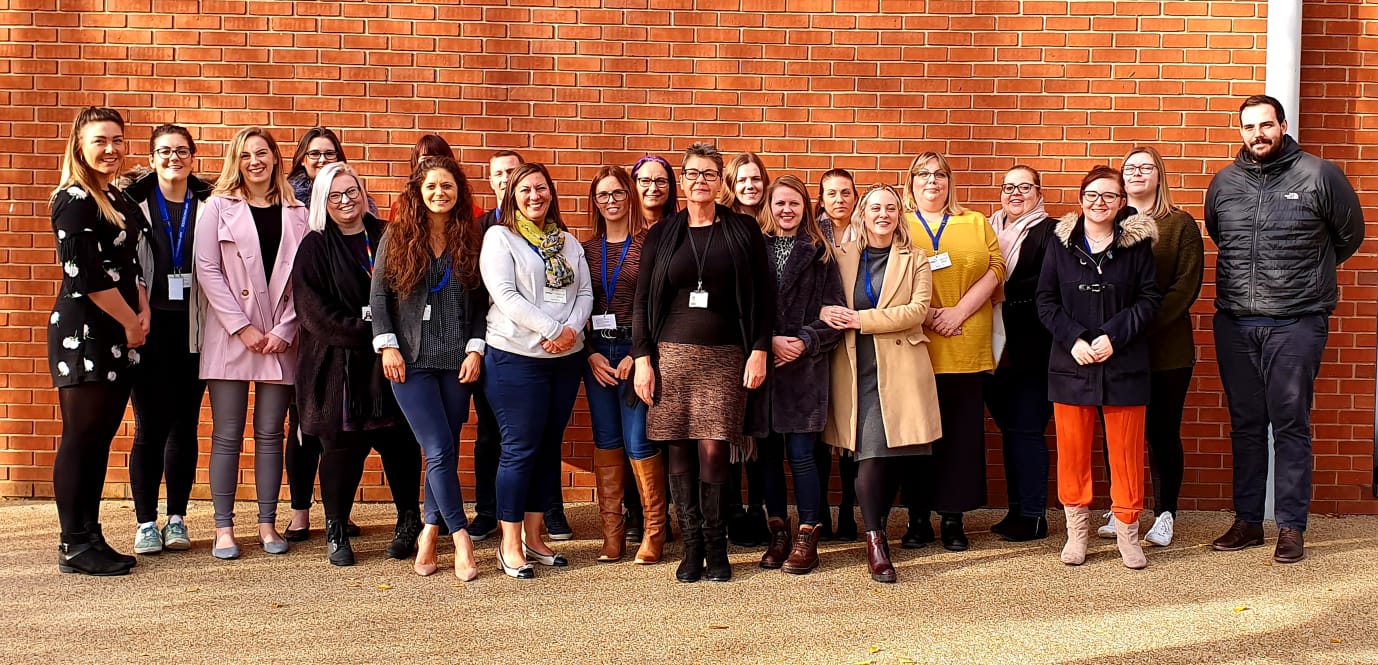
Once again it's that time of year when NPS senior management are keen to drum up new recruits for the training programme, especially men as the advert is full of them. Unfortunately the campaign coincides with desperately sad news emerging from the inquest into the Conner Marshall case. It's not so much a case of an opportunity to "Guide. Advise. Inspire." as Watch. Worry. Weep. This from the Guardian:- 

Probation officer supervising Conner Marshall killer was 'overwhelmed'

A probation services officer broke down in tears during an inquest as she described being “overwhelmed” by her workload in the months before a serial offender she was supervising murdered a teenager in an unprovoked attack. Kathryn Oakley said the Wales Community Rehabilitation Company (CRC) was chaotic and short-staffed at the time she was supervising David Braddon, who went on to kill 18-year-old Conner Marshall at a caravan park in south Wales.

Oakley said she “was thrown into the deep end” and was juggling 60 cases at the time. She was forced to stay in the office until midnight sometimes to try to catch up. Managers came and went frequently and oversight of her work by her seniors was often ad-hoc, Oakley told the inquest in Pontypridd. “It was a very difficult environment,” Oakley said. “Some days I wouldn’t leave my chair all day. One week I was seeing 15 to 20 people all day. Sometimes I worked until 12 at night. It was very difficult to keep a tab on things. Sometimes I didn’t have time to sit down or even have lunch. You’re talking about an impossible task.”

The inquest was told that Braddon, who was being supervised after being convicted of assaulting a police officer and drugs offences, missed a string of appointments and admitted that he was drinking and had come off medication that helped his mental health problems. A barrister for Marshall’s family, Kirsten Heaven, suggested to Oakley that she could have taken firmer action against Braddon. Oakley replied: “If I had more time I would have made more checks and had a more investigative approach.”

Braddon, who was 26, had been staying at the caravan park with his estranged partner and their children when a row erupted over an ex-boyfriend. He had taken a cocktail of drugs and alcohol and he armed himself with a kitchen knife, announcing that he was going to look for the ex-boyfriend and kill him.

Mistaking Marshall for the former boyfriend, Braddon launched a frenzied attack on him, striking the teenager with a pole and repeatedly punching him before stripping him naked to humiliate him. Braddon, of Caerphilly, south Wales, fled and was eventually arrested by police in Scotland. He pleaded guilty to murder and was sentenced to life with a 20-year minimum term.

Asked by Heaven if she had thought of whistleblowing about the situation at Wales CRC, Oakley said: “We were all in the same boat. We just got on with it. We tried to do the best we could in the environment.”

The Wales CRC was set up under the controversial 2013 probation reforms led by the former justice secretary Chris Grayling. Thirty-five probation trusts were dismantled and replaced with 21 CRCs to manage low- or medium-risk offenders, while the National Probation Service looked after those posing a higher risk.

Oakley said: “It was the government who decided to split the probation service. I can’t answer for what the government did to probation. It needs to be answered at a higher level.” In her witness statement for the inquest, Oakley said staff were encouraged by managers not to take action against offenders if they breached their licence conditions unless absolutely necessary because the CRC lost money if this happened.

In court Oakley said the “paid-by-results” issue was “rolled out” by the press and unions and added that officers were encouraged to engage offenders rather than enforce breaches. 

The inquest continues.

--oo00oo--

This from BBC Wales online:- 

Conner Marshall: Murderer's probation officer 'did her best'

A probation officer who had been monitoring a serial offender when he went on to murder a teenager told an inquest she did the best she could under the heavy workload.

Conner Marshall, 18, was beaten to death at Trecco Bay in Porthcawl in March 2015. Killer David Braddon, who was 26 at the time, pleaded guilty to murder and is serving a life sentence. Braddon was subject to two community orders at the time.

A Pontypridd inquest into Mr Marshall's death heard Braddon had repeatedly missed appointments to supervise his behaviour. During the hearing, probation officer Kathryn Oakley broke down and said she had been given an impossible job. The court heard she was new to the role and Braddon was her first case. She was employed by Wales Community Rehabilitation Company.

The barrister for the Marshall family, Kirsten Heaven, asked Ms Oakley if she told the probation service when Braddon, who was diagnosed with depression and anxiety, had stopped taking his antidepressant medication without talking to his GP. Ms Oakley said she had encouraged Braddon to speak to his doctor. She was then asked whether she would have handled the situation differently. Ms Oakley broke down and said: "In an ideal world I wish I had. But I did the best I could under the heavy workload.You're talking about an impossible task."

The inquest heard that Braddon had drug and alcohol issues. He had missed a treatment appointment and was still drinking. Ms Oakley said she was unaware of the missed appointment because she was on holiday in Mexico at the time. Ms Heaven asked her: "You were told he was drinking four cans a night and you were told alcohol led to an increased risk of harm. Why were alarm bells not ringing?"

Ms Oakley said she "was a bit concerned about that" but said because of the pressure of the workload it meant she did not investigate this further, which she would have normally done if she wasn't having to deal with 60 separate cases. Ms Oakley told the court she felt let down by her employer.

The inquest continues.

--oo00oo--

Our heart goes out to all those involved, especially the officer and we all earnestly hope she is being fully supported.

Tuesday, 7 January 2020

Napo at Work in the South West 28

Thanks as always to the reader for forwarding the following:-

December 2019

Branch Report 34


Dear Members,

This report, is my last, as 2019 draws into Christmas. It has been, as promised, a difficult four months since we reported the upheaval changes to rid us all of the Working Links model and what was done to destroy better working practices for the public, so that Working Links could redirect our resources and the finances in order to survive another day.

We have all understood this year the worst ever HMIP report on record. Followed by the sudden departure of a Chief Officer and the subsequent reorganisation of most staffing to help repair the damage caused by Working Links and their enablers. The roll out of the new framework going forwards into January is a now welcome and mainly agreed structure that has the support of the unions. The Case Management model has now for the first time in 5 years achieved an agreement on management action when staff report overwork situations. This did not see any progress on a weightings arrangement as the structure is set up on a special measures intention. It is acknowledged there are not enough staff for the work and the intense recruitment will address the issues as fast as suitable appropriate applicants can be found to fill roles.

In that process we have not established a full moratorium but the employers have agreed to relax all the formalities on staff related matters, where possible, to save time, reduce bureaucracy and engender support to staff in difficulties. This is at last a measured way forwards and it took the external Seetec Senior Management to realise to put the brake on and re direct the blind over excessive management.

With Seetec now firmly recognised and properly in control, the overview of the new model has taken apace under the guidance and hard work of the MoJ representative. NAPO and the sister unions have been working closely on the obvious flaws in the proposals and much of the initial concerns have been recorded and wherever possible addressed. For example case allocations has now been restored to the professional grade with appropriate procedures to ensure professional sign off. It restores some balances to workloads and removed the nonsense of the suggested percentage distributions in the hope of a flood of PO grades joining the CRC shortly. The redirections of face to face management is now assured. Telephones are back as a working tool. How Working Links thought the job could be done without them illustrates further gross negligence. 


Considerations are ongoing for the buy up of staff toil accrued, should staff want it and paid overtime arrangements where work demands are great. Also, where local arrangement demand a flexible approach to workload management, cluster working can be deployed, as may well also use of redirection of some staff in exceptional circumstances. These arrangements could not have happened without the sheer number of consultation negotiations that we have been engaged. The active inclusions of many staff across the levels and the commitment from Seetec senior authority to try and ensure this transition year starts to deliver assured services would not have been possible as we were. Thank you, to all those staff who joined the range of consultations and putting across the real and stark situations that we have all endured. Your efforts have worked and the next three months should see the changes required.

In CP we have also agreed a consistent regional model going forwards that has the backing of staff grades in those areas and CP teams. It resulted in the first collective agreement with the privatised arrangements. That put the ongoing 4 year dispute to an end. The benefits work for all sides - a consistent model and for some less working days, built in breaks, remuneration, harmonisation of many practices and some valuable experiences learned in the way to manage future agreements. Sadly, the pay consistency parity issue, was not settled immediately at this stage. However, better news on that shortly. Our thanks go out to all those staff who gave up some significant time to deliver the regionally ratified outcomes.

Seetec themselves have yet to announce PAY news and we have continued to campaign for proper pay and rewards. I can assure you at every stage in those talks we have maintained a consistent position. There is news on this front to be announced shortly so again look forward to the detail.

2020 looks to be exciting with the roll out a full programme of much needed and welcome training. Free of the computer based farce of Working Links and back to comprehensive developments featuring 1-1 and group delivery. This will start to rebuild the workforce as a cohesive team renewed competencies, confidently delivering the daily pressure of workloads. The planning is done and the announcements due out shortly. We all expect this to lift practice and put another country mile of distance from the gross incompetence of Working Links and their facilitators from which our members and staff have suffered.

In my view we are now travelling a different journey and at the least a renewed direction. The General Election outcome will have sealed the future contractual plans for TR2 and a further split for interventions. Seeing the returning journey for case management now established as the responsibility of the state and off to NPS in the extended likely date of summer 21.

When I took up the role of NAPO SSW chair it was clear to me and others the prospects of facing Working links, an already established dubious company was going to be fraught with danger. It was a challenge, presenting great personal risk. To formally disagree and be the spokesperson for the branch whatever it takes was always going to be incredibly hard. I set out on that understanding and to do the role as assertively and aggressively as possible should the need arise. I have had the skills and the support of some fantastic people in service and in the broader trade union movement. This branch SSW formed many complex strategies fighting off compulsory Redundancies and major policy changes to impact on terms and conditions. Attacks on staff, false allegations, inappropriate and failing disciplinary procedures. Sickness absences and Grievances at record highs in my 36 years service. Staff leaving in volume and dissatisfaction across the board. Favouritism, nepotism and cronyism the centre of the Working Links way and those enablers. 


We still have some distance to go to see these practices extinguished in full. For me we are a long way from the full on dictatorial although some senior management still attempt the same traits and recent tricks sadly. We have taken local political action in the form of a council led motion against Working Links performance, well before HMIP took any notice. They only had to ask us three years ago plus it is not like we have been silent on the issues. The branch contributed to the parliamentary inquiries, the audit accounts and many other sources. We have taken Joint Secretaries action followed the two years of ACAS talks to failure. We disagreed within the union internal national ranks many times as their weak and short sighted agents wanted to form inappropriate agreements. This included most other union officials. I have been complained about from all sides and many times over from them (so what!). It is a tough role and at one point I had to take my own national union to the Certifications Officer for their gross incompetence and my team resoundingly beat them. Thanks to Dave Rogan et al from the outset saw what a staged and nasty game they played out at the members significant expense. All while holding our local team together. No, it has not been an easy journey.

There have been many changes in the staffing reshuffles and reorganisation nothing short of some real professional and well managed Seetec HR interventions that have gone a long way to securing contractual compliance and staff protections. The changes are set and processes are agreed. We are moving directly away from the previous disasters and the joint unions have contributed with that new direction of change. With this in mind it took a new management to relieve us all of the impasse that had locked progress. We have forged new positive understandings. The future is set to amalgamation and a second TR2 by which we will be splintered further as the bulk of staff return to what is seen as the central activity of case management. It is clearer to me at least continuing in the role of Branch Chair now that the main fighting is over would go against my announcement in the branch AGM in June 2019 that it would be my last as the chair of the SSW branch. Everything we have done on behalf of our SSW members has been vindicated over this arduous 5 years. That is now assured given the agreements are in train to protect staff and work through to transition. In January the executive will look to see how we organise election processes.

In the meantime It is Christmas and the customary Chairs message is to enjoy your time off whatever you celebrate or not. To thank all of the SSW branch executive, those special members (secretary) in that team who have started a different direction as a result of the changes. Hoping all goes well as we all move into what effectively will become the last full year of the CRCs. Have a restful and enjoyable break.

Dino Peros 

Napo Branch Chair SSW

Monday, 6 January 2020

Latest From Napo 197

Here we have some thoughts on the year just ended from the Napo General Secretary:-  

Impressions from 2019 – another year of achievement

Even those people who boast of their preternatural ability to predict events well ahead of them happening, would surely have had some difficulty with their forecasting for 2019.


Napo entered this year in the hope that our impressive campaign, which has exposed the folly of the Transforming Rehabilitation disaster, might at last find some traction with Government Ministers who actually seemed to have a clue about the role and value of the Probation service. Our request for a drastic policy U-turn began to gain momentum after a pivotal meeting with then Ministers David Gauke and Rory Stewart in January. For it was they, unlike the useless incumbents who had previously filled their positions, who sent some important signals that they wanted to do some serious business with Napo as they looked for face saving solutions to the shambles they had inherited from Grayling’s woeful social experiment.

Granted we already knew of the plan to move Offender Management (OM) work from the Private Sector into the NPS Wales later in December this year, but until this point we had not seen any sign that anything other than a wholesale re-marketisation of Probation services was on offer.

Goodbye Working Links

Once it became clear that Ministerial top cover had been approved for senior MOJ/HMPPS leaders to engage in exploratory discussions with the unions, we proceeded to examine how we could arrive at a similar position in relation to OM work across England. As we have subsequently reported on numerous occasions and despite every effort, it was a step too far for the Government to agree to do all of the right thing and bring everything back in house.

Our approach to these negotiations was given a timely boost in February when the widely predicted demise of the Working Links Community Rehabilitation Company came to pass as they entered into Administration. This, following months of blatant lies by their diminishing band of hapless Directors, whose denial that there was any sort of operational problem that yet another taxpayer bail-out would not solve, was staggering even by their disgraceful standards.

Fortunately, the above Ministers denied Working Links that luxury; calling time on the contract of this most inept private provider whose corporate incompetence was to feature in a number of Serious Further Offence reviews (and which is very likely to be brutally exposed in at least one forthcoming Coroners Enquiry next year).

Whist the hard working CRC staff would not have shed any tears at their employer’s departure from the scene, the decision to invite SEETEC KSS CRC to fill the void was quite extraordinary. Coming as it did at a time of more uncertainty for employees and in the face of numerous logistical and operational challenges for unions and senior HMPPS management alike.

The media exposure around the Working Links debacle and the release of further reports by Chief Inspector of Probation Dame Glenys Stacey and her team, and our many friends in Parliament helped us to maintain pressure on Messrs. Gauke and Stewart that a major change in direction was required.

‘Unified Model’ announced

On May 16th 2019, a date which must surely feature forever in the annuals of Napo history; we saw a remarkable U-turn in the form of an announcement that 80% of the roles associated with OM work would be transferred to the NPS from the private sector along with the staff undertaking these functions, once the termination of CRC contracts had taken place.

As I said in my speech to Napo’s AGM in Cardiff, this was a significant victory in the sense that Napo with our limited resources, could have helped to secure such a climb-down over a high profile flagship Privatisation policy that had been engineered specifically to divide and conquer the profession and turn it forever into a commercial commodity.

That day also saw the most remarkable media engagement that this union and professional association has ever seen in our history, with over 30 national and local interviews taking place between Midnight 15th May and 7:00 pm Thursday 16th May. I was proud to be part of that, alongside National Chair Katie Lomas and Press and Parliamentary lead Tania Bassett with the support of the Napo Communications Team.

Negotiations still to be concluded

Since May, Napo has been engaged in intensive and complex negotiations around the transfer of Offender Management work to NPS Wales and beyond. This work has been focused on trying to secure a new Staff Transfer and Protections Agreement relevant to all of our members in the NPS and, if it does not prove possible to prevent new provider contracts for Interventions and Programme work, for our members who will work for new commercial enterprises.

We await news on some important unresolved issues and will be in touch with members again in the New Year.

Other highlights

These included the appointment of new Legal providers Morrish and major progress in the implementation of our new data base and the development of our Members Helpline. We also saw the successful transfer of Offender Management work into NPS wales from KSS CRC where our Napo Cymru reps have excelled themselves. We have seen the launch of a new and bespoke reps training programme which has helped bring new activists into our ranks, and following a highly productive session with our Family Courts Section we warmly welcome a new Co-Vice Chair in Nicola Ebong-Taylor.

We bade farewell to Dean Rogers our former Assistant General Secretary, with massive thanks for his contribution to Napo and its members over six years, especially the victory through the courts on the policy relating to pay in Lieu of Notice (PILON).

Membership has seen a promising increase as we launched our ‘big conversation’ initiative to get Napo out into more workplaces. We intend to do much more of this next year. Napo officials have also done a sterling job in our campaign to maintain pressure on CRC owners to move towards pay parity with the NPS; and while there is clearly more to be done here, I expect to be able to report a major breakthrough in negotiations with one of the CRC owners in early January which I hope will have a significant ripple effect elsewhere.

Our track record of defending members collectively and individually via our National Rep Panel and through numerous SFO reviews and Coroners Inquests is unparalleled, and we have built a high quality relationship with senior HMPPS leaders in marked contrast to that which has gone before and have materially strengthened or collective bargaining mechanisms.

We have secured automatic pay progression for NPS members in 2020 despite the delay in negotiating the Competency Based Framework and have taken some important steps towards Professional recognition in our engagement over a future Licence to Practice. Additionally, we have made some important progress on behalf of members in the areas of ViSOR and OMIC and have established new arrangements for taking forward issues for our members working in Approved Premises.

All of this still doesn’t give the full picture of all of our work this year, but it indicates why it is so important that staff belong to a trade union. In my considered view that should be Napo.

Finally, my best wishes to all of our members and your families for a restful Xmas holiday as we get ready for the major challenges ahead of us, and which I will talk about in my first Blog post of the new year.

The next five years

Once again, the UK is to be governed by a party that most voters rejected at the ballot box. The UK desperately needs Proportional Representation to level the playing field, so Parliament reflects the people and all votes count equally. Regardless of how you vote, a system which produces a ‘majority’ government most people didn’t vote for is just wrong.

Ian Lawrence, General Secretary

Sunday, 5 January 2020

Reflections on a Decade

All the festivities now being but a distant memory, life begins to get back to normal. Goodness knows what lies in store for any of us, but as a new decade gets under way, it's naturally time for reflection. First a heart-felt plea from a Napo Branch and an expansive piece from Rob Allen:- 

End of Decade Message

This decade began well for Probation – remember we were a leading world class provider of services. Unfortunately, under that Coalition, we quickly got hijacked/derailed in an unnecessary and unwanted carve up, by he who shall not be named & his bidders. The destruction worked well if that was the plan & probation has never, & may never, fully recover. But we are still here, doing as brilliant a job as our owners & leaders allow us, for minimal reward or thanks in bloody difficult conditions. 


Our CRC colleagues have suffered multiple redundancies having been reduced to the bone in staff & budgets. The NPS continues on a trajectory clearly driven and controlled by civil servants who know or care little about the work, our customers or its demands. You carry on & pick up the pieces, making the most of a bad lot.

So a new decade offers hope. For many colleagues things can only get better & maybe the changes ahead under the amalgamation of case management offers the chance for leaders to listen & front line staff to speak up. Now is your moment to contribute to how things ought to be. If we don’t, alien forces in distant planets will dream up a dastardly plan; resembling a probation solar system far, far away.

So the start of 2020 is an opportunity to try to influence our future, to make our voice heard & rather than “put up & make do” to ensure that we work together to shape a probation service we can once again be proud of.

The branch wishes all members & friends best wishes for 2020. We need more members to step up & make a difference. Please get active………

NAPO East Midlands Branch Exec.


--oo00oo--

A Year - and Decade - of Penal Policy

In a curious symmetry, penal policy in 2019 has mirrored the decade as a whole.

The year opened with then Prisons Minister Rory Stewart proposing to abolish short prison sentences, followed by his boss David Gauke giving perhaps the best ministerial speech on sentencing since Ken Clarke spoke at King’s College London just after the 2010 election.

While Clarke’s plans to reduce prison numbers went with him to the back benches in 2012, Gauke’s seem to have departed with him from the Conservative Party altogether. The new Prime Minister wants to toughen up what he sees as “our cock-eyed crook-coddling criminal justice system”. While Boris Johnson’s sights are set on longer periods in prison for the most serious sexual, violent and terrorist offenders, this could easily have the effect of raising the going rate for a much wider range of crimes.

Sentencing for serious offenders has become more severe over the decade with the custody rate for indictable offences rising from a quarter to a third and the average length of a jail term for all offences up from 13.8 to 17.4 months. But because of falling clear up rates and prosecutions, the prison population is slightly lower now than 10 years ago. Sentence inflation has occurred in spite of the guidelines produced by the Sentencing Council which marks ten years of operation next year and whose impact leaves much to be desired.

Johnson’s line has been hardened by November’s dreadful events at Fishmonger’s Hall which tragically cut short the lives of two inspiring young people involved in an initiative to open up educational opportunities for prisoners. A month earlier, former prisons boss Sir Martin Narey had controversially called for prisons to forget rehabilitation, and with the new government pledging a root-and-branch review of the parole system and talk of shifting responsibility for sentencing, prisons and probation back to the Home Office, the new decade looks set for a repressive turn.

It might have been different. But David Cameron’s hubristic promise of prison reform as a defining, progressive cause for his government disappeared with him and his lieutenant Michael Gove after the EU referendum. While Gove subsequently returned to the May government in other roles, his successors at Justice belatedly abandoned his lofty rhetoric about redemption and instead focussed much needed attention and funds on addressing the major operational crises created by reckless staff reductions and the increasing availability of drugs in prison. Promised new prison legislation has never materialised but controversial measures such as the introduction of incapacitant spray for prison staff are on their way.

Alongside, the probation service, sacrificed on the altar of privatisation by Chris Grayling in 2014, suffered a widely predicted decline in performance, charted in forensic detail by former Chief Inspector Glenys Stacey. In May this year, Gauke bowed to the inevitable by announcing the re-nationalisation of probation supervision.

The last years of this decade have thus been spent on urgent repairs to the largely self- inflicted damage wrought on criminal justice institutions. Had the numbers of people sentenced by the courts not fallen by more than 40% in the last ten years, prison and probation services would have collapsed.

Youth justice has fared a little better- if only because numbers in custody have continued to fall through the decade, with fewer than 800 under 18-year olds behind bars in October 2019 compared to more than 2,000 ten years ago. Black and minority ethnic over-representation among children locked up remains shockingly high and the fall in numbers has not led to better conditions or treatment for those who continue to go to custody.

Much criticised Coalition plans to build a very large Secure College were abandoned after the 2015 election and it would not be a huge surprise if a similar fate awaits the new Secure School due to be opened by Christian charity Oasis next year but already postponed until 2021. Many of the more radical proposals in Charlie Taylor’s 2016 Youth Justice Review were dispatched to the long grass but in the face of decades of experience, the belief in the need for yet another form of youth custody has proved enduring.


Rob Allen

Saturday, 4 January 2020

Dear Dominic Cummings,

I Want The Job

Oh boy, what a breath of fresh air mate! I know exactly what you mean, even though I hope you don't mind my saying you do ramble a bit - you'd definitely benefit from some old skool probation expertise in the precis department - we're experts at distilling shed loads of info into 2 pages of A4 in order to get what we want from magistrates. I know you like history and of course Churchill was famous for demanding solutions on one side of paper. Learning point - make it snappier next time, ok?

As one blogger to another, I think you and me could get on well. Ok, I'm not in the flush of youth, but I've definitely got attitude and experience at rattling cages - so we're on the same page. Probation is completely fucked - that other sociopath Grayling saw to that - and you know as well as I do there's no young Turks at the MoJ - they're all establishment drones nowadays and don't know their arse from their elbow - have you any idea how much their piss-poor contracting skills have cost us over the years? Learning point - dig out the figures.

Now we both know your boss is dead keen on sorting out crime and punishment because lets be honest here, it's just an embarrassment what's going on both sides of the prison walls. Obviously there's votes in getting it sorted, am I right? But it's going to take some serious thinking outside the box and preferably by weirdo's like an old probation officer. Have you any idea what a diverse bunch of awkward, independently-minded, innovative, creative, misfits and odd balls we used to be? Learning point - read the blog.  

Lets get to the point - I know how to fix things and am available for an immediate start. I hate bureaucracy and believe me, the Civil Service are the problem! Probation needs a no-blame divorce from HMPPS asap. Lets get it done by January 31st! While we're at it, lets get shot of those irritating, robbing bastards, the CRC privateers and bring it all back in-house. The clever bit is turning a reunified Probation Service into an independent, arms-length QUANGO, regionally-organised and locally accountable! Honest mate, just like magic, a thousand flowers will bloom, trust me. Learning point - it's all on the blog.

Obviously there are one or two details I've left out because I don't want to show my hand too early and before I get the job, but rest assured, as soon as the paperwork is done, I will reveal everything and I'm sure it will all work out just fine. 

Look forward to hearing from you and keep up the good work mate! 

Yours, etc     

Friday, 3 January 2020

Probation Diversity

Apart from negative publicity, have we all noticed how probation continues to slip quietly out of view and behind the ever-tightening grip of the bureaucrats now running NPS? Firmly in denial mode and now subject of direct government control, what possible hope can there be for the Service being able to address the many issues it faces, workforce diversity being but one of many? We've discussed this before, so it might be worthwhile reminding ourselves of this from September 2018 which was reproduced from the Probation Institute magazine:-

Where Are The Men?

As we continue to 'mark time' whilst the sham probation 'consultation' exercise is undertaken, we might as well take a look at another article from the latest PI magazine:-

Gender Matters in the PQiP

Paula Hamilton, Senior Lecturer at Sheffield Hallam University, explores some possible implications of the gender ratio in probation training.

As one of the three nationally contracted Higher Education providers, here at Sheffield Hallam University we are currently delivering the academic component of the Professional Qualification in Probation (PQiP) to the fourth cohort of learners from across the North East and North West divisions. One of the most notable, but perhaps less surprising, features of the first cohorts is the relative lack of diversity in terms of age, ethnicity and gender and the predominance of young, white, female learners. National data from Havas people/ HMPPS (2017) shows that for PQiP cohorts 1 to 3 (including 2A) between 78% and 82% of learners have been women – a pattern of gender distribution that is replicated in the North East and North West divisions.

The age and ethnic distribution of the future probation officer workforce are, of course, hugely significant issues given the widely accepted notion that the probation workforce should reflect the communities they work with. However, it is the feminisation of probation, which continues apace in terms of those recruited to the PQiP, that is arguably one of the most significant changes that has occurred in the organisation but one which has received relatively little attention. While it is not within the scope of this short piece to engage in an in-depth discussion of what is meant by ‘feminisation’, it should be noted that it is a contested term and refers to a potential difference of occupational culture, not just numerical female domination of an occupation.

From its inception until the early 1990’s the probation service was a male-dominated organisation. The ‘tipping point’ came in 1993 when for the first time there were more women than men probation officers. It has been noted that this shift from a masculinised to a feminised service came, paradoxically, at a time when the then Conservative government ideology and rhetoric had become increasingly punitive and indeed ‘macho’; exhorting the probation service to take ‘centre stage’ in the masculinised penal system or face its own demise, and explicitly encouraging ex-police and armed forces (male) personnel into the service as second career entrants via a direct entry, skills based only route.

Against this backdrop the Diploma in PS (Dip PS) was introduced in 1998. While cementing the break with social work education, the Dip PS resisted the technicist, skills-only version of the probation officer envisaged by the Conservatives, retaining training within a higher education framework through the integration of a work-based NVQ alongside academic assessment in a two year qualification. Despite the fact that the Dip PS involved a common undergraduate level for all entrants, it tended to attract mainly female and mainly white graduates in their twenties (NOMS 2013) with the gender ratio at this level in 2007 being 72.86% women to 27.14% men (Ministry of Justice 2007).

In 2010 the Dip PS was replaced by the Probation Qualifications Framework (PQF) in an effort to enable existing probation service officers (PSOs) to train without losing job security and employment benefits via a foundation degree to an honours degree alongside a fast track qualification – the Graduate Diploma – for existing and newly recruited staff with relevant degrees.

In 2016 the PQF was replaced by the Community Justice Learning framework, at the apex of which sits the PQiP. Although access to the PQiP itself is fairly straightforward for those graduates with a relevant degree – and in that respect is similar to the preceding PQF Graduate Diploma - the PQiP is underpinned by a flexible (and complex) matrix of distance learning qualifications that allow learners to ‘bridge’ their previous learning to make them eligible for the PQiP or provide ‘ladders’ for learners who have practice experience but little or no academic background.

Therefore since 2010 and the introduction of the PQF, the two main entry points for professional qualification have been progression from probation service officer grade or via a relevant undergraduate degree, both of which in themselves are female-dominated. As offender-facing work has been increasingly devolved to probation service officer grade, the number of PSOs has expanded and the gender balance is broadly the same as for main grade officers.

Meanwhile a gender gap in those going to British universities has also gained pace - in 2016 66,840 more women than men were on degree courses, compared with a gap of 34,035 in 2007 (The Guardian, 5th Jan 2016). More specifically the requirement to have a relevant degree to be eligible for the PQiP in essence means a criminology degree (in the main), itself a female-dominated subject area.

All of this raises three questions - why has the probation service become feminised, but perhaps more importantly, what are the implications of this and, if deemed desirable, what can be done to attract more men (as well as older people and those from minority ethnic backgrounds) into probation?

Some of the potential answers to these questions are explored more fully elsewhere (see for example Annison, 2013; Mawby and Worrall, 2011, 2013), but in terms of explaining how and why the service has become feminised, commentators have highlighted the broader trend of younger women seizing opportunities for work and education and seeing opportunities for professional development and a place for themselves in probation. Also discussed is the idea that due to repeated restructuring and reorganisation and changes to working practices, the ‘ideal (probation) worker’ (Acker, 2006) has been recast with women responding in terms of adaptability and in addressing competency requirements (Annison, 2013).

In terms of implications, authors have raised issues around the relationship between a feminised probation service and other male-dominated criminal justice agencies, and the difficulties some male officers may face in navigating the feminised environment (Mawby and Worrall, 2011). Significantly however, it has been suggested that the feminisation of probation has not, as might be stereotypically expected, meant a return to the service’s traditional social work roots, and furthermore that many women officers see the ‘symbolic mother’ role as inappropriate, instead seeing their role more as ‘symbolic victim’ in terms of confronting and holding offenders to account (Mawby and Worrall 2013:137).

This brings us to one of the less well explored areas – the implications of a feminised service for work with, overwhelmingly, male offenders. Mirroring most theories of crime causation, and ignoring the fact that crime is an overwhelmingly a male activity, aside from work with domestic violence perpetrators (and perhaps even less so these days even with this group), policy and practice tends not to explicitly recognise or engage with masculinities and masculine self-identity. My own research has suggested that this is a vital dimension of practice, and that the process of personal change for some men would seem to be predicated on a complex, emotionally charged, reworking of masculine identity which then allows them to move towards desistance.

While of course not suggesting that women cannot help men through this process, it would seem that having regular access to a male role model who displays alternative ways of being a man to the harmful masculinities associated with criminal and anti-social behaviour can be an extremely important element. Such practice that engages with men, masculinities and emotions could, in turn, also be seen as offering an opportunity to have a more transformative effect on the particular discourse of masculinity that is seen to still pervade the criminal justice and penal systems into which female officers seem to have been subsumed (Mawby and Worrall, 2011).

Finally in terms of attracting more men into the service – and a more diverse workforce overall, the recent relaxation of eligibility criteria for the PQiP from a relevant i.e. a criminology degree to any degree may go some way to achieve this but it is still too early to tell. However, it is likely that more radical action, including efforts to raise the media and public profile of the probation service in line with other male-dominated criminal justice agencies, along with continued efforts to maintain and promote the professional status of the probation officer will ultimately be what is needed.

Paula Hamilton

Thursday, 2 January 2020

Probation Under NPS Control

A recent Twitter exchange:- 

Image

AC December 2019 highlight. Congratulating our newly qualified Probation Officers, now working across the National Probation Service South West and South Central ...

JB Gender balance?

AC I know! And other issues of representation. I haven’t got the figures to hand but we have got a way to go. We’ve been working on it for as long as I’ve being involved with trainees in 2005. Any thoughts and ideas gratefully received...

JB Research, openness, flexibility, willingness to listen, discuss, debate and innovate. Community and volunteer involvement. Not possible as part of Prison and Civil Service command and control.

AC I’m sure you won’t be surprised when I say I disagree & that we are - although I do accept NPS has more to do to involve the communities we serve . However I’m not sure how improvement in any of these will address gender balance?

JB Civil Service control makes community involvement impossible. Volunteers? Job satisfaction, salary erosion, worsening terms & conditions, disability provision etc all play a part in hindering diverse work force profile. I'm sure research will enlighten.

AC Whether we agree or not, I’m still not sure why you think these issues are more important to men than women?

JB I don't recall saying that.

AC You commented about gender balance. I asked how we might attract more men.

JB Not sure why asking a question about gender balance raises a query regarding the gender of the person asking the question.

AC Sorry that’s not what I meant. You commented about lack of gender balance in photo I posted. I agreed & asked how we might attract more men. You replied with a list of things you say is wrong with Probation, none of which I think are the reasons we attract females but not males.

JB Blimey - if you think it has nothing to do with the list of things I suggested then I guess there's very little point in continuing a dialogue.

AC My only query was why you thought these issues are more important to men than women. And I disagree that dialogue has little point. How else do we develop. Should we only engage with people we agree with?

JB As a Probation Officer I've always felt it part of the job to ask awkward questions from a variety of standpoints and as a prelude to some open discussion. I'm sure gender balance is of concern to everyone, isn't it?

AC I value your questions and challenge & agree it’s an important part of what we do in Probation whatever role we have.

Tuesday, 31 December 2019

Happy New Year 2020!

As a new year is about to start, it's naturally time to reflect on the old one. Memory might fade and be unreliable, but in addition to the diaries we have a blog to remind us of the journey we've all been on. Begun from a strong sense of frustration and annoyance at the beginning of the decade, so remarkably it ends in the same vein:-  

Saturday, 4 September 2010

In the Beginning

All blogs have to start somewhere - and this is it. I'm fed up with work - a job I absolutely loved has gone horribly wrong and is about to get a whole lot worse. I moan endlessly to colleagues - and clients - they listen politely and think 'poor sod, he'll be retired soon'. Nobody understands what the hell probation is all about - there's never been a decent tv drama series and this void of universal ignorance is ruthlessly taken advantage of by successive governments in order to wreak havoc upon us. We've been nationalised, rationalised, marginalised, bureaucratised and will shortly be privatised. I feel helpless as this madness goes on around me and then suddenly all becomes clear - start blogging!


Sadly, due to 'improvements' to the platform I use for blogging, it no longer seems possible to reproduce graphically the level of interest, but suffice it to say we are in steady decline from a peak of a million 'hits' a year to almost exactly half that figure. Still not an inconsequential figure, but as any endeavour would be wise to note, the writing is on the wall so to speak. Despite this and for what ever reason, at least a thousand people continue to tune in daily even if nothing much is happening, but if 'probation' gets into the news for any reason, that easily quadruples and in so doing proves the 'brand' still has mileage in it.

Although it clearly remains a mystery to many, I still love the essential concept and ethos that lies behind the term 'probation' and despite many good people continuing to jump ship and there being a new nasty government in control, I sense in 2020 there will still be a job to do for all those who still care about our profession and its laudable aims. As always, thanks dear reader for taking the trouble and using this platform to inform, educate, debate and share. 

To all friends and colleagues, I will raise a glass tonight and wish you all a very Happy New Year!            

Tuesday, 24 December 2019

Happy Christmas 2019

Feeling fed up and tired of waiting in for Amazon to deliver Christmas? Bored and suffering sensory overload watching digital perfection on your high definition flat screen? I thought so. 


Then why not grab a sherry, light a Hamlet and be transported back in time. Settle down and marvel at what was on offer in the 1980's via analogue low resolution VHS, complete with drop-outs, creases, shaky and sometimes very unstable images. Enjoy! 

Happy Christmas!

Monday, 23 December 2019

There Could Be Trouble Ahead

As always, the Daily Mail proves to be the perfect place to run a flag up the pole and make sure enough people are keen to salute it. Here's Rob Allen's take on word of Priti Patel's plans for a return to the Home Office:-  

Back Home? Why Sentencing, Prison and Probation Should Stay in the Ministry of Justice

The Johnson government is reportedly considering a shift in responsibility for sentencing, prisons and probation from the Ministry of Justice to the Home Office. I’m not altogether surprised; before the 2016 referendum, I heard Michael Gove tell an Oxford seminar he’d like to disband the MoJ (of which he was then Secretary of State), because it was a European type of institution unsuited to British traditions.

There may be a superficial attraction in combining responsibilities for crime and punishment - not only to those who favour a more punitive approach to offending but by those who hope that any Home Office plans for a crackdown would be tempered by the need for the Department to pay for its penal consequences.

But while the MoJ’s governance of criminal justice over the last 12 years may have earned it few friends, progressive reform is much less likely to emerge from our Interior Ministry – famously described by Whitehall-watcher Peter Hennessey as the graveyard of liberal thinking since the days of Lord Sidmouth.

For one thing, according to a book she co-authored in 2011, Priti Patel the current Home Secretary believes that we need to “reverse the tide of soft justice”, ensure that persistent offenders are imprisoned for long periods of time and make prisons “tough, unpleasant and uncomfortable places”. After the Coalition- a Conservative Agenda for Britain written with four other current government ministers argues that “the primary purpose of our justice system is to protect our society, not to act as a welfare service for convicted criminals”. Current proposals to increase the severity of sentences may not go far enough to satisfy their desire for harder penalties.

Not all Home Secretaries are so firmly in the Michael Howard Prison Works tradition of course, but responsibility for security and the reduction of crime will often produce penal policy which is at best risk averse and at worst unnecessarily harsh. The Ministry of Justice, whose centre of gravity includes human rights and the rule of law ought to tend to a more balanced approach to the use and practice of imprisonment. Home Secretary Theresa May's joke to Justice Secretary Kenneth Clarke., “I lock ‘em up, you let em out” says something about the departments as well as their ministers.

Consolidating crime and punishment in the Home Office would raise questions about the Parole Board - increasingly a judicial body that would not sit well in Marsham Street; about Youth Justice which many think belongs in the Education department; and about the role of Police and Crime Commissioners.

Ms Patel and her colleagues argue that the role of PCCs should be extended so they are responsible for commissioning custodial and non-custodial sentences for those who are convicted. There could be some benefits to such a devolved approach if it creates a dynamic to encourage the development of better alternatives to prison and measures to reduce re-offending. But the government’s belief that public confidence in criminal justice will be restored by longer prison terms make these Justice Reinvestment outcomes unlikely in the current climate.

After the fall of the Berlin Wall, the new democracies of Eastern Europe who wanted to join the Council of Europe had to meet certain conditions including abolishing the death penalty and moving their prison systems to the Ministry of Justice. The latter was to encourage the "civilianisation" of highly militaristic and security focused approaches to detention. The MoJ is now responsible for prisons in all 47 countries of the Council of Europe, except Spain.

In their book, Ms Patel and her colleagues have deplored the fact that an increasing human rights agenda and increasing interference from Europe discourage prison sentences, decrying the Council of Europe’s belief that prisoners should be treated in a way that reflects the normal life of freedom that all citizens generally enjoy.

Moving prisons to the Home Office could mean much more than an administrative change. It could be a fast and slippery slope to people going to prison not as a punishment but for a punishment.


Rob Allen